
Review · MEDINA AZAHARA TOURS
Cordoba: Half-Day Medina Azahara Guided Tour
Medina Azahara was built as a seat of power, not just a palace. On this half-day trip from Córdoba, you’ll walk through the remains of the city where the caliph’s government worked and foreign ambassadors were received. I like the guided walk, which gives the scattered archaeological remains a clear story, and the museum film, which helps you picture the city before it fell.
The main consideration is language: the live guide and optional audio guide are in Spanish. The site also has many stairs and little reliable shade, so bring water, a hat, and good shoes.
Key points
- A city built for rule: Medina Azahara served as the administrative heart of Al-Andalus, not simply as a royal residence.
- A 90-minute site tour: A guide leads you through the archaeological remains and explains their place in the city.
- A museum film for context: The visitor center offers a video that shows Medina Azahara as the capital it once was.
- Transport is included: Round-trip bus travel from Córdoba makes this easier than arranging the trip on your own.
- Plan for sun and steps: There are many stairs, and the site has little shade.
- Spanish-language tour: The live guide and optional audio guide are listed in Spanish.
A capital city beyond Córdoba’s walls

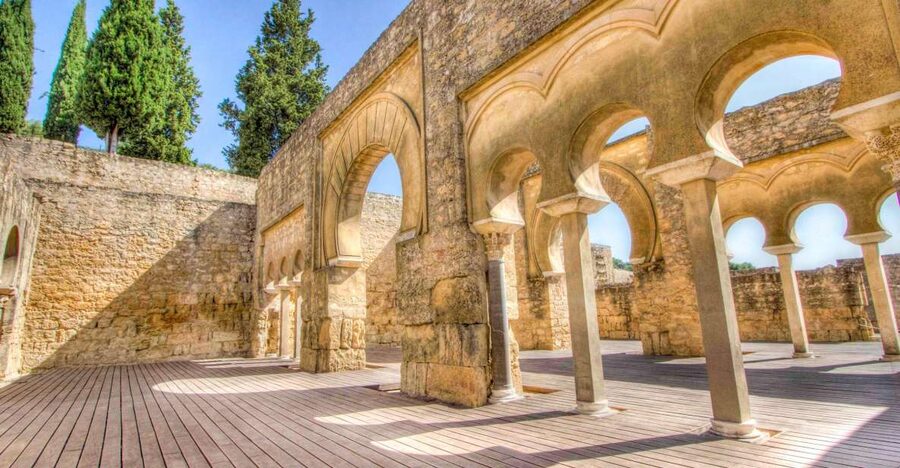
Medina Azahara, often translated as the Bright City, was built on Córdoba’s western outskirts by Abd-ar-Rahman III, the Umayyad Caliph of Córdoba. Construction began in 936 and continued through 940. The city became the working center of Muslim Spain, known as Al-Andalus, with government and administration inside its fortified walls.
That purpose changes how you read the site. This was not only a place for the caliph to live. Its buildings served ceremonies, public administration, worship, trade, craft work, and daily life. The city included reception halls, mosques, government offices, gardens, a mint, workshops, barracks, homes, and baths. Aqueducts supplied water.
The remains can be hard to interpret without help. Archaeological foundations and open spaces do not always announce what stood there, or how the different parts of a city fit together. A guide can connect the surviving site to the roles it once played, giving you a better sense of why this place mattered to Córdoba and to the wider Islamic world.
The bus ride and half-day schedule
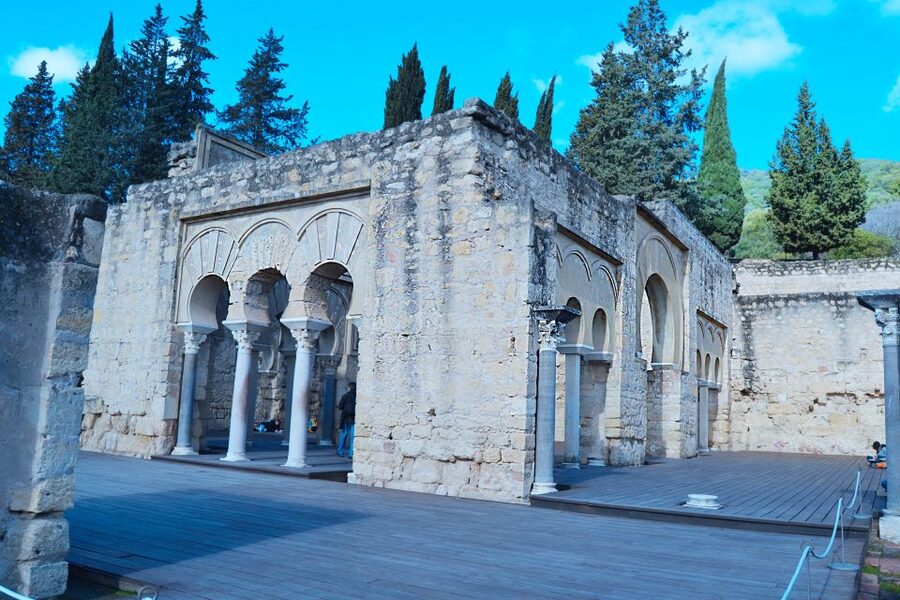
The excursion lasts about 3.5 hours and includes round-trip transport from Córdoba, admission, and a guided tour. The site visit includes a 90-minute guided walk. The bus returns to Córdoba at around 1:30 p.m., making this a manageable half-day addition to a stay in the city.
Transport is useful here because Medina Azahara lies outside central Córdoba. You can leave the route planning to the tour and focus on the visit. The meeting point varies depending on the option booked, so check your confirmation carefully before setting out. One practical detail: the bus may depart promptly. A past visitor found the pickup point tricky to locate, so arrive early rather than trying to spot the coach at the last moment.
The exact start time depends on availability. Check the chosen date and option before booking, especially if you have another commitment later that day. Food and drinks are not included, and the tour returns around lunchtime, so plan accordingly.
More Medina Azahara tours in Cordoba:
- Córdoba: Guided Tour of Azahara Medina
★ 4.5 · 1,042 reviews - Córdoba: Medina Azahara 3-Hour Guided Tour
★ 4.6 · 969 reviews - Cordoba: Medina Azahara 3–Hour Guided Tour
★ 4.7 · 472 reviews
Walking through the archaeological site
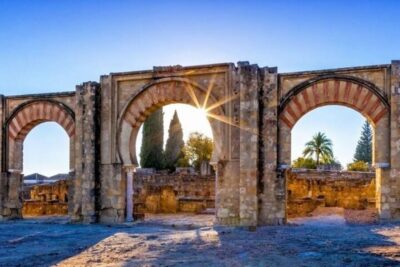
The main event is the guided visit across the remains of the palace-city. For about 90 minutes, you’ll follow the guide through the site and learn how its buildings served the caliph’s court and government. The value lies not only in seeing old stonework, but in understanding the functions that made this a real city: formal reception, administration, worship, work, and residence.
The city’s layout also hints at the scale of the undertaking. A fortified settlement with ceremonial halls, offices, mosques, gardens, workshops, barracks, baths, and a mint needed a steady supply of water. Aqueducts helped provide it. Those details turn the visit from a walk among ruins into a lesson in how a medieval capital operated.
Expect stairs and uneven walking conditions. The monument is not suitable for people with mobility impairments, and the tour’s pace and route may be difficult if stairs are a concern. The visit is more comfortable in sturdy shoes than in sandals or footwear chosen for appearance over grip.
Sun protection matters. There is little shade, though a guide may know where some shade can be found. Do not count on it as a substitute for a hat, sunscreen, and plenty of water. In hot weather, that preparation can make the difference between enjoying the explanations and wishing the walk would end.
Why a guide changes the visit
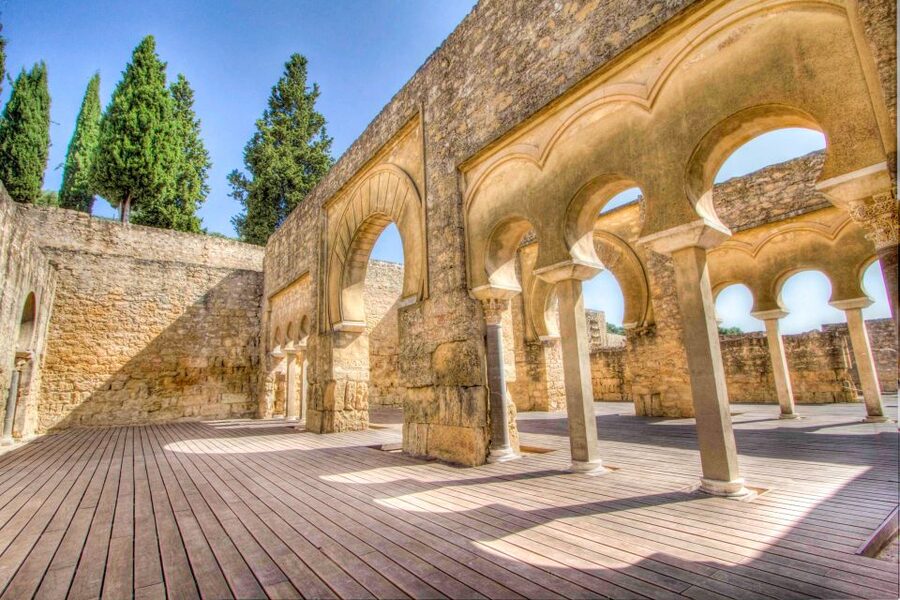
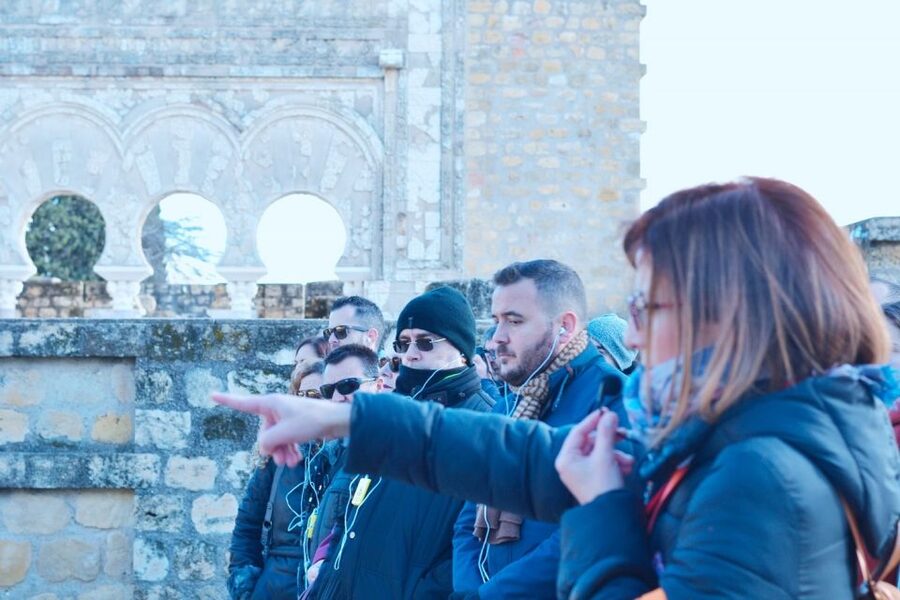
The tour is fully narrated, and the quality of the guide can shape how much you take away. Guides named by past participants include Lorena, Miguel José, David, Susana, and Rafael. Their individual styles differ, and you cannot select a particular guide in advance based on the information provided, but the strongest accounts describe guides who made history easy to follow, paced the walk well, and added details you might otherwise miss.
A guided visit is especially useful at a site where the remains may not explain themselves. The right context helps you connect the palace-city’s parts to the broader story of Islamic Iberia, rather than treating each stop as a separate pile of stones. Past praise has centered on clear explanations, useful historical details, good pacing, and an ability to keep the group interested.
Language is the key limitation. The live guide is listed as Spanish-speaking, and the optional audio guide is also in Spanish. If you do not understand Spanish, do not assume an English tour will be available. Check the language options for your date before paying. One visitor who spoke only limited Spanish found the guide’s quick delivery difficult to follow, despite recognizing the guide’s command of the subject.
The visitor center and film
The museum and visitor center add a second kind of explanation. At the archaeological site, you encounter the remains in their actual setting; at the center, a film shows Medina Azahara as it was when it served as the capital of Al-Andalus. That visual overview can help you imagine the city’s scale and function before, or after, walking through the ruins.
This stop is worth keeping in the schedule. The film offers a bridge between what survives and what once stood there, while the guide gives you details tied to the site itself. Together, they help the city feel less abstract. If you are short on time, resist the urge to treat the visitor center as a throwaway stop; it is part of the experience’s historical explanation.
More half-day trips in Cordoba:
- Historical Italica: Half-Day Guided Tour from Seville
★ 4.5 · 416 reviews - From Seville: Half-Day Guided Bike Trip to Italica
★ 4.9 · 126 reviews - Half-Day Wine Tour in Andalusia in small group
★ 4.1 · 19 reviews
Is $18 good value?
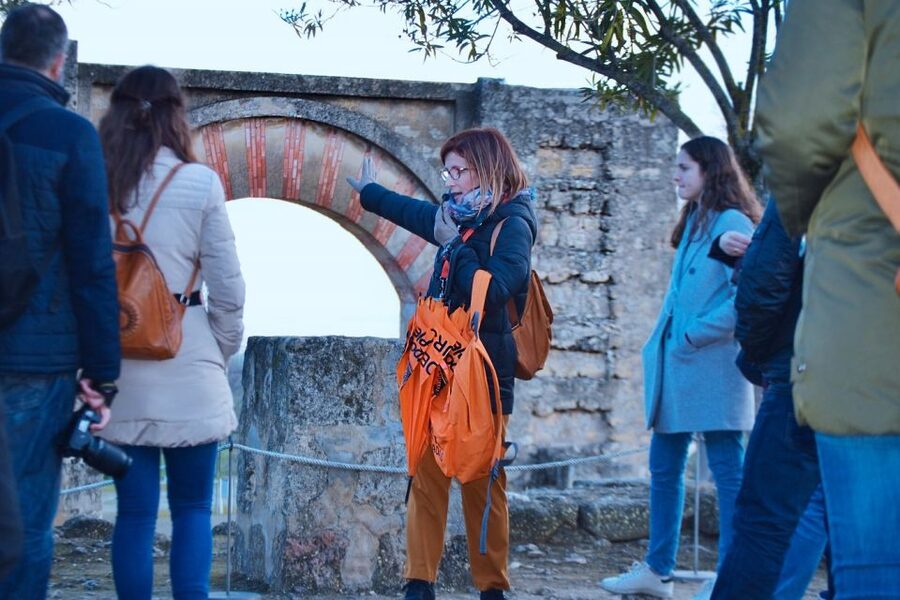
At $18 per person, the price covers transport from Córdoba, admission, and a guided tour. That is a practical package if you want to avoid organizing the trip yourself and would value someone explaining the site as you walk. The Spanish-language tour is also an important part of the value calculation: if you can follow Spanish, the narration may add a great deal; if you cannot, you may get less from the guided portion.
You can choose to visit a site without a guide, but the city’s significance is easier to grasp with context. A guide can explain why a particular area mattered and how the city’s functions connected. The included film then adds a visual sense of the capital in its heyday. You are paying for more than the ride and entry, though the benefit depends on your language skills and interest in guided history.
The tour’s short format is another part of its appeal. In three and a half hours, you can get to the site, spend a focused period walking it, visit the center, and return to Córdoba. It will not provide an unhurried, full-day archaeological study, but it is a sensible way to see Medina Azahara without giving up an entire day.
Prepare for the stairs, heat, and language
Bring comfortable shoes, a sun hat, water, and biodegradable sunscreen. The site has many stairs and little shade, so pack these before leaving Córdoba rather than hoping to find what you need at the monument. Food and drinks are not included.
Before booking, check the start time, meeting point, and tour language for your selected option. The meeting point can vary, and the pickup may be punctual. If you need an English-language experience, confirm that one is actually offered for your date; the activity information lists Spanish for both the live guide and optional audio guide.
The activity offers free cancellation up to 24 hours in advance for a full refund, and a reserve-now, pay-later option is available. These terms can help if your plans are still shifting, but confirm the conditions shown for the specific booking you choose.
Who should book this Córdoba excursion?
This tour suits you if you are interested in Islamic Iberia, want a guided introduction to Medina Azahara, and prefer transport and admission arranged together. It is also a good fit if you have a half-day free in Córdoba and want more context than a quick, self-guided look at the ruins can provide.
It is less suitable if stairs are a problem, if you are looking for a shaded outdoor visit, or if you need an English-speaking guide and cannot verify one for your date. The walk is exposed, and language matters to the experience.
I would book it if you can follow Spanish, are comfortable on stairs, and want a compact, well-organized visit with historical explanation. If not, first check for a language option that works for you or consider whether the site and film alone would be enough to justify the trip.
FAQ
How long is the tour?
The excursion lasts about 3.5 hours. The guided walk at the archaeological site lasts about 90 minutes, and the bus returns to Córdoba at around 1:30 p.m.
What language is the tour in?
The live guide is listed as Spanish-speaking. The optional audio guide is also in Spanish.
What is included in the price?
Round-trip transportation from Córdoba, tickets, and a guided tour are included. Food and drinks are not.
What should I bring?
Bring comfortable shoes, a sun hat, water, and biodegradable sunscreen. There are many stairs and little shade at the monument.
Is the site suitable for someone with mobility impairments?
No. The activity is listed as unsuitable for people with mobility impairments, and the monument contains many stairs.
Where is the meeting point?
The meeting point varies depending on the option booked. Check the details for your selected option, and allow time to find the pickup location.
Can I cancel for a refund?
You can cancel up to 24 hours in advance for a full refund. A reserve-now, pay-later option is also available.
Newest tours in Cordoba
- Heritage Córdoba: The most essential tour in Córdoba★ 5.0 · 8 reviews
- Guided tour of Medina Azahara only in french★ 5.0 · 11 reviews
- Full Córdoba tasting★ 4.6 · 24 reviews
- Cordoba: Guided Tour of Medina Azahara at Night★ 4.5 · 92 reviews
- Extra Virgin Olive oil tasting★ 4.9 · 79 reviews
- Cordoba: Early Bird Private Tour of the Mosque-Cathedral★ 5.0 · 14 reviews
- Córdoba: Tour of the three cultures to see the city in a day★ 4.9 · 17 reviews
- Tapas Tour in Córdoba★ 4.1 · 18 reviews
Medina Azahara Tours, compared.
Medina Azahara Museum and Archaeological Site Tour
Read our review →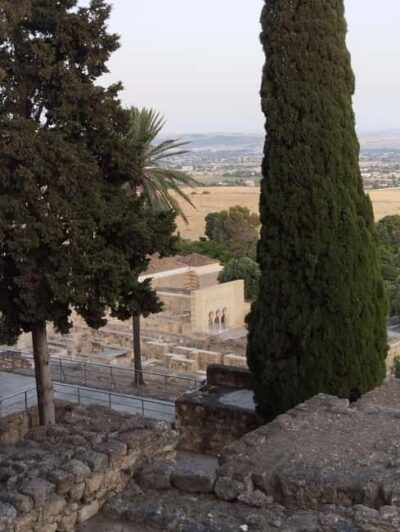
Browse the lists this tour appears in