
Review · JEREZ DE LA FRONTERA TOURS
Jerez de la Frontera: Andalusian Horse Dance and Museums
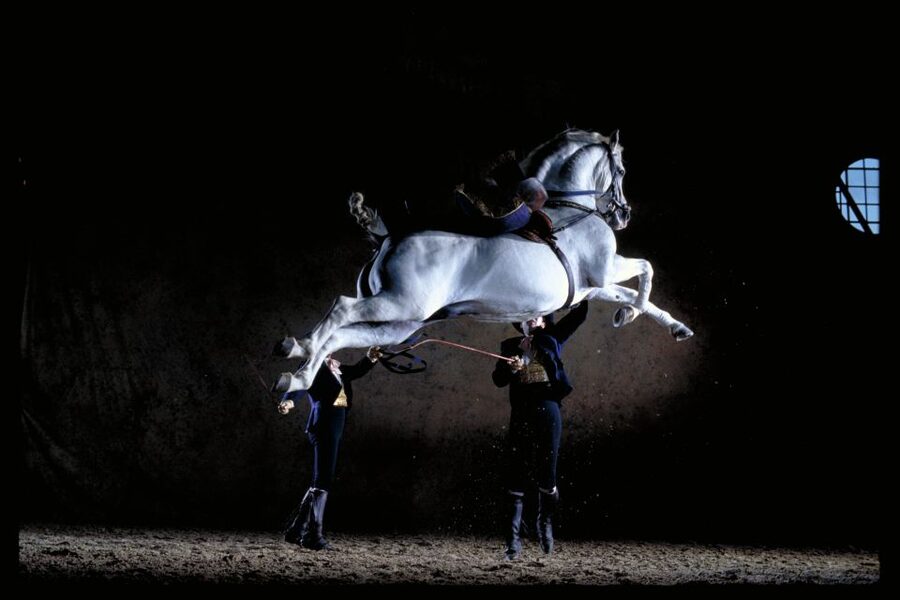
The real draw in Jerez is watching Andalusian horses and riders turn classical dressage into a choreographed performance. In a 90-minute show set to Spanish music, horses piaffe, perform the Spanish walk, draw carriages, and move through group routines in traditional costumes.
I like that this visit puts the performance in context: you can see the equestrian museum, the saddlery, and the carriages, not just the arena. I also like the chance to observe horses warming up or being prepared, which makes the polished show feel connected to daily training.
One consideration: there is a lot to fit into 3.5 hours, and the schedule matters. The audiovisual presentation ends at 11:00 AM, while the show runs from noon to 1:30 PM. Some areas, including the palace and saddlery, close on Saturdays and public holidays, and arena seats may not be comfortable for everyone.
What makes this visit special
- A 90-minute equestrian ballet: Expect six to eight choreographies, from paired movements to advanced dressage and group work.
- A closer look at Andalusian equestrian tradition: The museum explains the origins and history of horse art in the region.
- Carriages in working detail: See historic vehicles alongside harnesses and equestrian costumes.
- A proper half-day outing: The ticket includes the show and access to several museum and palace areas, with different opening times to plan around.
- A chance to watch the preparation: Depending on access and timing, you may see horses training, warming up, or being groomed.
- A practical note for your visit: Bring a passport or ID card, and plan to enjoy the show without taking photos or video.
The arena is the heart of the visit
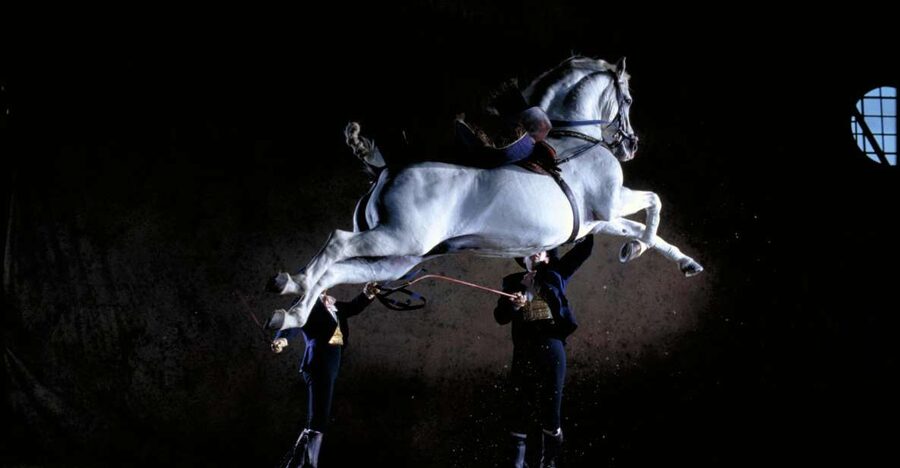
The Royal Andalusian School of Equestrian Art presents How the Andalusian Horses Dance, a performance built around the control, training, and movement of Andalusian horses. The setting matters. This is not simply a sequence of tricks: the riders guide the horses through patterns that draw on classical dressage, Doma Vaquera, and traditional equestrian work.
The show lasts about 90 minutes and usually includes six to eight choreographies. You may see a Pas de Deux, in which horses move together, and the Passage and Piaffer, a series of controlled steps in place and forward. Other routines include airs on horseback, carriage work, group movements, and a closing sequence performed in unison.
Some of the most technical moments come from Haute École dressage. Levades, caprioles, and courbettes ask the horse to lift and control its body with precision. The piaffe, in which a horse steps in place, and the Spanish walk, with its high, deliberate leg action, are easier to follow even if you know little about dressage.
The choreography is accompanied by classical music and riders in 18th-century-style costumes. The music and costumes give the event a formal, theatrical feel, but the central pleasure is watching how closely each horse responds to its rider. You can see the training in the small cues and measured transitions, not only in the dramatic leaps.
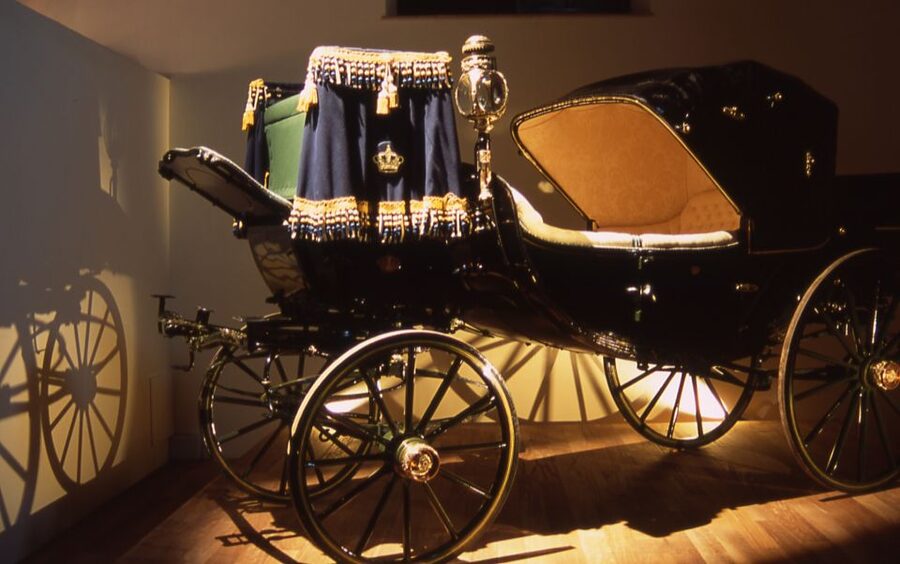
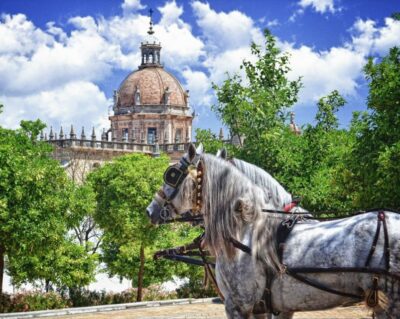
Carriage routines add a different kind of skill. Horses pull vehicles with classical harnesses while coachmen guide them through the arena. These carriages once served as transport; here, they show how driving skill and horse training can work together as a performance.
The arena is a strong choice if you appreciate horses, riding, or live performance. If you do not know dressage, you can still enjoy the movement and pageantry, though a little background helps you notice the difference between a high-energy flourish and a controlled exercise. A few visitors have found the seating uncomfortable, so keep that in mind if you are sensitive to hard or fixed seats. The arena is wheelchair accessible.
More horse rides in Jerez De La Frontera:
- Jerez de la Frontera: How the Andalusian Horses Dance
★ 4.6 · 6,168 reviews - Jerez: Yeguada de la Cartuja Carthusian Horses Tour
★ 4.8 · 970 reviews - Andalusian Horses Dance Show
★ 4.5 · 483 reviews
Start early at the visitor centre
Your first stop is the Visitor Reception Centre, where the ticket office is also the place to exchange your ticket. The audiovisual presentation traces the history of equestrian art in Andalusia and the Royal School. It is included, but it is only available until 11:00 AM, so arriving early gives you time to see it before the noon performance.
The presentation is a useful introduction rather than a substitute for the live show. It gives you a little context for the school’s traditions and the work behind the horses’ training. If you go straight to the arena, you miss a helpful bridge between the region’s equestrian past and the routines you will see performed.
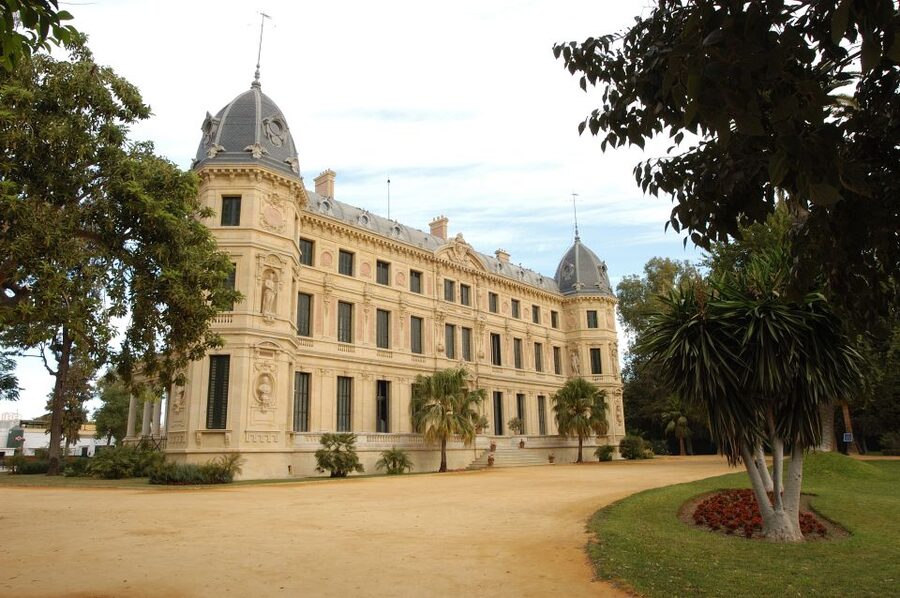
From the reception area, the grounds lead toward gardens with a variety of exotic plants. The palace rises above them and is described as a fine example of 19th-century architecture. Even if you are mainly here for the horses, allow time to look around rather than treating the grounds as a corridor between ticket desk and arena.
The palace is included, but it is closed on Saturdays and public holidays. That matters when you are choosing a date: the ticket covers several parts of the complex, but not every area is open every day. Check the schedule for your visit rather than assuming all listed attractions will be available.
Give the equestrian museum time
The Museum of Equestrian Art is in the palace basement and has 11 rooms devoted to the horse and equestrian art in Andalusia. Its subject is broader than the performance itself: it helps explain the regional traditions, equipment, and techniques that make the show more than a pretty display.
I would give the museum enough time to read the interpretation and look at the exhibits, rather than hurrying through before the arena opens. The museum is open from 10:00 AM to 2:00 PM, so it fits naturally before the performance, though the exact order of your visit depends on the day’s timing.
The saddlery is another worthwhile stop. This is where harnesses are made and repaired, a practical craft that links the history displays to the carriage routines in the arena. The saddlery is closed on Saturdays and public holidays, so it is one more reason to check which parts of the site are open on your chosen date.
If you can see horses being trained or prepared, pause to watch. The preparation is a different experience from the finished show: you see grooming, warm-ups, and the quieter exchanges between horses and staff. It can make the performance’s precision easier to appreciate. Access and timing may vary, so treat it as an added opportunity, not a guaranteed scheduled segment.
Finish among the carriages
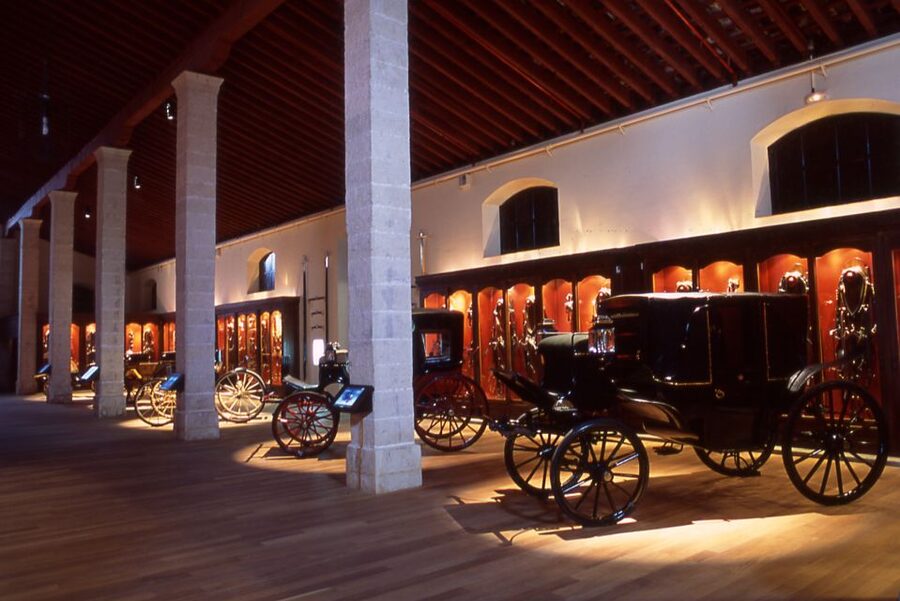
The Carriage Museum rounds out the visit with vehicles, harnesses, and equestrian costumes. The collection makes the carriage display in the arena easier to understand. Instead of seeing a vehicle pass by and then disappearing, you can examine the equipment and design at your own pace.
The museum is open from 10:00 AM to 3:00 PM, giving you a wider window than the equestrian museum. If the show finishes at 1:30 PM, you still have time to visit afterward, but do not leave it until the last moment. The site closes its doors, and some parts of the complex may wind down before you have seen everything.
Photography rules deserve attention. The activity information lists cameras and video recording as prohibited, so plan to watch rather than document the visit. That can be a relief in the arena: you can follow the horses’ movements without a screen in front of you. If taking pictures is important to you, check the current rules directly before setting out, since policies can differ by area or event.
More museum visits in Jerez De La Frontera:
- Seville: Puro Flamenco Show with Optional Museum Ticket
★ 4.8 · 6,088 reviews - Seville: Museum of Illusions Entry Ticket
★ 4.2 · 1,196 reviews - A Fantastic Visit To The Museum Of Illusions Seville
★ 4.5 · 390 reviews - Cordoba: Medina Azahara Museum and Archaeological Site Tour
★ 4.8 · 199 reviews
Is $38 fair value?
At $38 per person, this is more than a ticket to a horse show. The price includes the performance, the audiovisual presentation, the equestrian museum, and the Carriage Museum, plus entry to the palace and saddlery when those areas are open. For someone interested in horses or Spanish cultural traditions, that makes the price easier to justify than a stand-alone performance ticket.
Value depends on how much you use the included access. If you arrive in time for the presentation, explore the museum rooms, and visit the carriages, you get a substantial half-day visit. If you come only for the 90-minute show, you will see the main attraction but leave much of the ticket’s value unused.
The main trade-off is time and comfort. The schedule asks you to coordinate several spaces with different opening hours, and the arena seats may not suit everyone. In warm weather, the performance can also feel hot; bring water for before and after the show, and take advantage of the snack bar if you need a break.
Plan the day around the clock
The overall visit takes about 3.5 hours, with the show scheduled from noon to 1:30 PM. Since the audiovisual presentation ends at 11:00 AM, I would arrive with enough time to exchange your ticket, watch the film, and start exploring before the performance. The equestrian museum is open from 10:00 AM to 2:00 PM, while the carriage collection stays open until 3:00 PM.
The ticket exchange takes place at the school’s ticket office. Bring a passport or ID card. Pets, smoking, glass objects, weapons, and sharp objects are not allowed; cameras and video recording are also listed among the prohibited items.
If you are coming from Seville or Cádiz, allow time for the onward journey and your return. The school can be reached by taxi from Jerez’s train station, and walking back to the station is another option. Do not count on finding a taxi immediately after the site closes. If you are travelling by train, buying your return ticket in advance is a sensible precaution, especially if you have a fixed connection.
The activity is wheelchair accessible, which is useful to know when planning a visit with someone who has mobility needs. The grounds and individual museum areas may have their own practical considerations, so contact the venue if you need specific access details.
Who will enjoy it most?
Horse lovers are the clearest match. The performance gives you an unusually close look at trained Andalusian horses, and the museum and carriage collection add substance to the spectacle. Riders and equine professionals may find the movements especially rewarding, but you do not need technical knowledge to enjoy the music, costumes, and group choreography.
It also works for families. Children who like animals may be captivated by the horses, though the show is a formal performance and asks for a stretch of seated attention. The museum gives the visit a quieter, more educational pace before or after the arena.
If horses are not your interest, consider how much you enjoy live performance and cultural history. The choreography and setting are appealing, but the technical details are a large part of the experience. Someone seeking a quick attraction or a purely hands-on activity may find the visit more structured than expected.
Should you book?
I would book this if you want to see Andalusian horsemanship in its own setting, not just watch a short arena act. The combination of dressage, carriage work, museum rooms, and the school’s grounds makes the half-day feel connected and worthwhile.
Choose a day when the palace and saddlery are open if those are important to you, and arrive early enough for the audiovisual presentation. If you are a horse enthusiast, this is an easy recommendation. If you are undecided, ask yourself whether a 90-minute equestrian performance and museum visit sounds like a good use of your time in Jerez. If yes, the $38 ticket offers a well-rounded way to spend the morning.
FAQ
How long does the experience take?
The activity lasts about 3.5 hours. The horse show runs from noon to 1:30 PM.
What is included in the ticket?
It includes the show, the audiovisual presentation, the palace, the saddlery, the Museum of Equestrian Art, and the Carriage Museum. The palace and saddlery are closed on Saturdays and public holidays.
When can I watch the audiovisual presentation?
The presentation is available until 11:00 AM. Arrive early if you want to see it before the noon show.
What are the museum opening hours?
The Museum of Equestrian Art is open from 10:00 AM to 2:00 PM. The Carriage Museum is open from 10:00 AM to 3:00 PM.
Where do I exchange my ticket?
Go to the ticket office when you arrive at the Royal Andalusian School of Equestrian Art.
What should I bring?
Bring a passport or ID card.
Can I take photos or record the show?
The activity rules list cameras and video recording as prohibited. Plan to watch without taking photos or video, and check with the venue if you need clarification about current rules.
Can I cancel the booking?
Yes. You can cancel up to 24 hours in advance for a full refund. The activity also offers a reserve-now, pay-later option.
Newest tours in Jerez De La Frontera
- Founder Winery: TOUR GASTRO EXPERIENCE★ 4.9 · 8 reviews
- Flamenco Show at La Guarida del Angel with Drink★ 4.6 · 27 reviews
- Jerez: Traditional Tapas Tour★ 4.6 · 138 reviews
- Jerez: Flamenco Show and Menú at Tablao Puro Arte 2025★ 4.5 · 213 reviews
- Jerez: Historic Center Guided Tour★ 4.5 · 272 reviews
- Jerez: Bodegas Álvaro Domecq Guided Tour with Wine Tasting★ 4.6 · 265 reviews
- Jerez de la Frontera: Sherry Winery Tour with Tasting★ 4.6 · 309 reviews
- Jerez: Guided Winery Tour with Wine Tasting★ 4.4 · 636 reviews
Jerez de la Frontera Tours, compared.
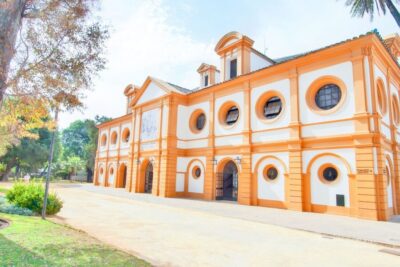
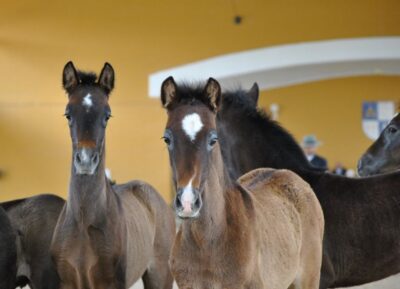
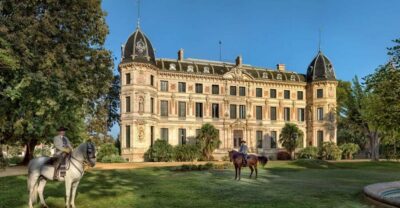
Royal Andalusian School of Equestrian Art Admission
Read our review →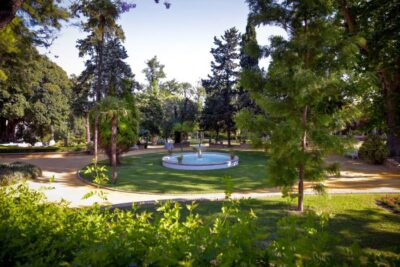
Bodegas Fundador Guided Tour with Tasting Session
Read our review →
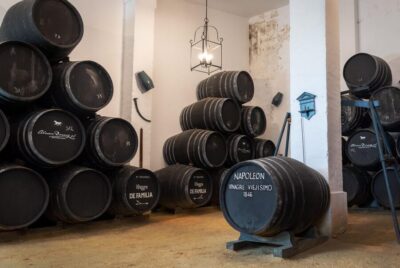
Bodegas Álvaro Domecq Guided Tour with Wine Tasting
Read our review →Browse the lists this tour appears in