
Review · ANDALUSIAN HORSE SHOWS
Jerez: Royal Andalusian School of Equestrian Art Admission
The horses are the main event here, but you see much more than a riding arena: the visit takes you through working stables, a tack room, palace rooms, gardens, and museums. At about $18, I like that one ticket opens up so many sides of the school, and I especially like seeing the horses train in their everyday setting.
I also like the chance to understand the craft behind the performance, from the harnesses in the saddlery to the carriages and costumes on display. One thing to plan around: training and saddlery work are not available on Saturdays, and the admission ticket is not the same as a ticket to the horse show.
At a glance
- Watch horses at work: On eligible days, you can see training in the exercise rings or indoor arena.
- Go behind the stable doors: A guided visit takes you to the octagonal stables and central tack room.
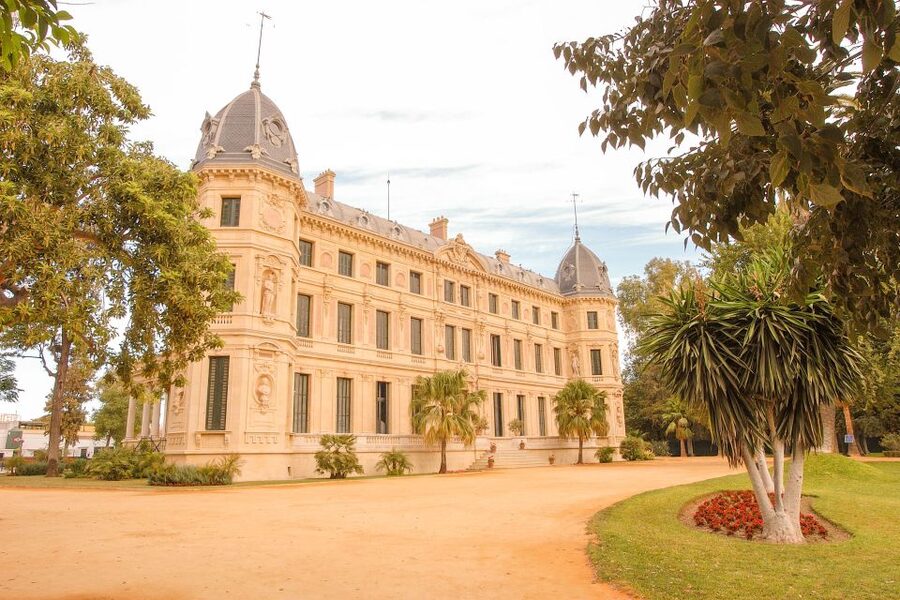
- See the setting as well as the horses: The 19th-century palace, gardens, fountain, and museum are part of the visit.
- Allow time for two museums: The equestrian museum has 11 rooms, and the carriage museum closes the route.
- Plan for a two-hour visit: You may want longer if you watch training and explore the exhibits at an easy pace.
- Check the day and ticket type: Saturday has no listed training or saddlery work, and a performance is separate from admission.
A school visit, not a horse show
The Royal Andalusian School of Equestrian Art is both a training school and a visitor site. Its horses and riders are the focus, but the admission visit is not a performance: it gives you a look at the school’s spaces, collections, and, on eligible days, its training routine.
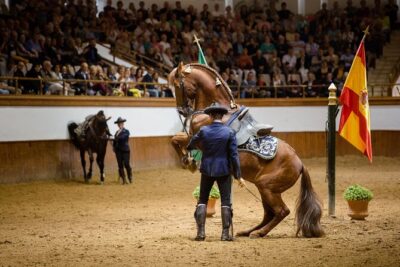
That distinction matters when you book. A show such as How the Andalusian Horses Dance is a different experience, while this ticket covers access to the school facilities. If you want the full staged display, check the show schedule and ticket separately rather than assuming it comes with admission.
At roughly $18 per person, the visit offers good value for a horse lover or anyone curious about Andalusian equestrian culture. You get more than a stable stop: there are gardens, palace rooms, an 11-room museum, working areas, and a carriage collection. The value depends in part on what is happening that day, so check whether training is scheduled before you choose your date.
More horse shows in Jerez De La Frontera:
- Jerez de la Frontera: How the Andalusian Horses Dance
★ 4.6 · 6,168 reviews - Cordoba: Equestrian Show General Entry
★ 4.5 · 2,333 reviews - Andalusian Horses Dance Show
★ 4.5 · 483 reviews
Start with the gardens and palace
The visit begins at the visitor reception center. Until 11:00 AM, an audio-visual presentation introduces the history of equestrian art in Andalusia. It can give you useful context before you see the horses, though the presentation is not available after that time.
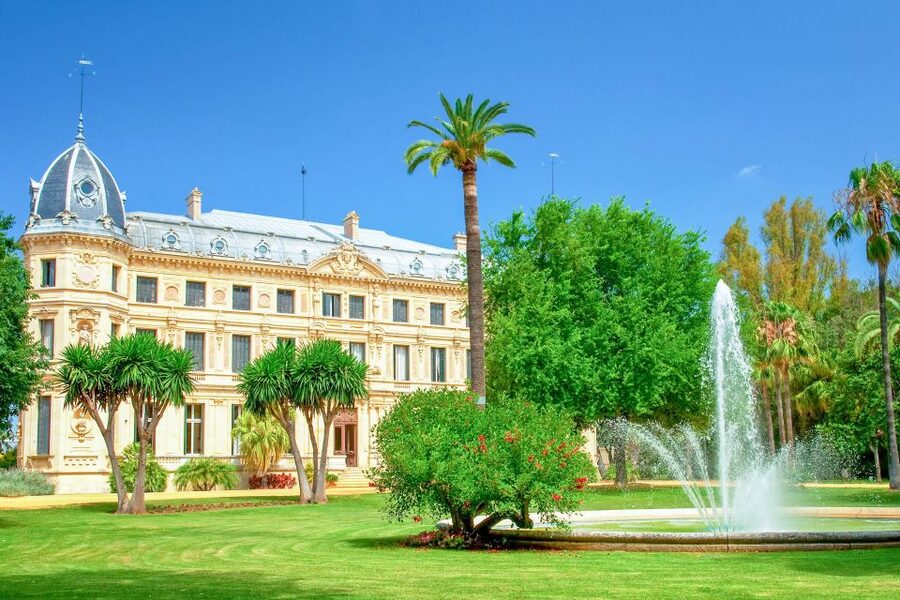
From reception, you enter gardens planted with a variety of exotic species. A large fountain sits at the center, with water jets drawing your eye toward the grounds. It is a pleasant pause before the more practical, working parts of the school, and a good place to take in the scale of the setting.
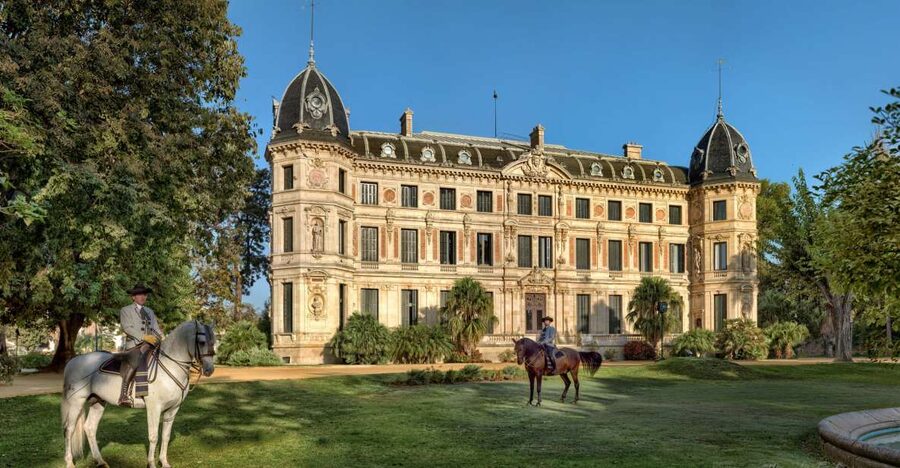
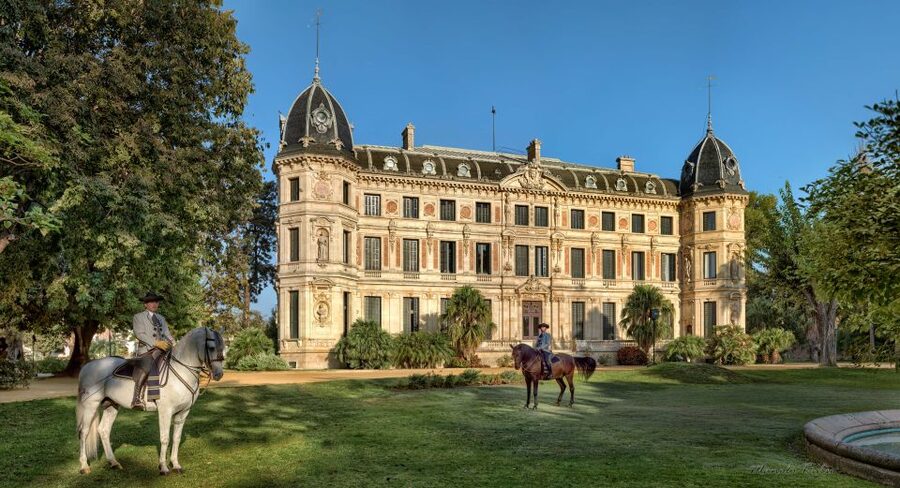
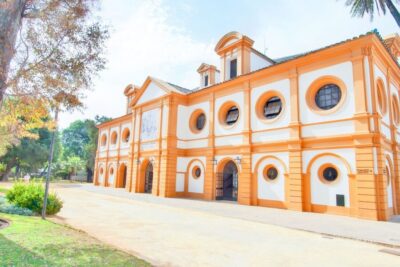
Beyond the fountain stands the palace, designed by Charles Garnier and built in the 19th-century style. The rooms on the ground floor are decorated to reflect their original design. I like this change of pace: after the gardens, the palace shows that the school’s identity is not limited to horses and training.
The palace is lovely, but it is only one stop in a visit with several different strands. If you are mainly here for the horses, don’t linger so long in the first rooms that you miss a training session or guided stable visit. The day’s schedule and the order of the tour can shape what you see.
The 11-room museum puts the horses in context
In the basement, the Museum of Equestrian Art is devoted to the origins and development of horsemanship in Andalusia. Its 11 rooms cover the horse and equestrian art in the region, along with the school’s own story and the movements performed by trained horses.
This is useful even if you arrive chiefly for the live training. Watching a horse work is more rewarding when you have some sense of the traditions behind the techniques. The exhibits add that context, while interactive displays offer a change from reading labels and looking at objects.
Some video displays have not always worked, so the presentation may vary. I would treat the museum as an important part of the visit, but not expect every screen to be operating. Its exhibits still help explain why the horse has such a strong place in Andalusian culture.
The saddlery shows the craft behind the performance
The school’s saddlery is where harnesses are made and repaired. The work is carried out by a master harness maker and apprentices, and seeing this part of the operation helps connect the polished appearance of the horses and carriages with the skill required to maintain their equipment.
This is a working space, not simply a display room. That is part of its appeal: you get a glimpse of the practical labor behind equestrian training and public performances. On Saturdays, saddlery work is not available to see, so factor that into your expectations if the craft side interests you.
The tack room is in the center of the school’s octagonal stable complex. It stores the harnesses used for daily training and shows, and its controlled conditions help protect the equipment. The arrangement makes sense once you see the horses’ quarters around it: this is a place organized for daily care and work, not just a backdrop for visitors.
Same city, a different kind of day:
- Jerez de la Frontera: Andalusian Horse Dance and Museums
★ 4.7 · 1,289 reviews - Jerez: Yeguada de la Cartuja Carthusian Horses Tour
★ 4.8 · 970 reviews - Jerez: Bodegas Fundador Guided Tour with Tasting Session
★ 4.8 · 714 reviews - Jerez: Guided Winery Tour with Wine Tasting
★ 4.4 · 636 reviews
Training rings bring the visit to life
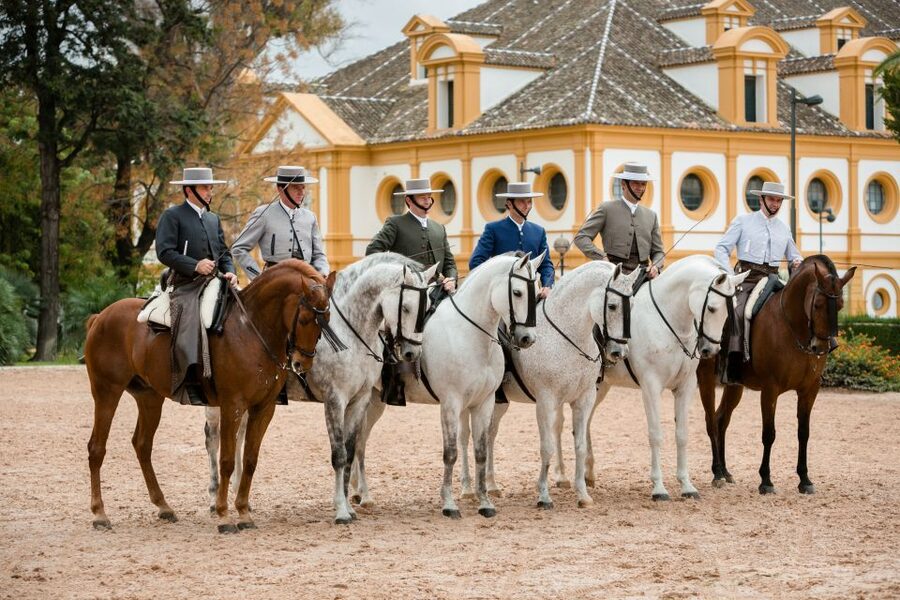
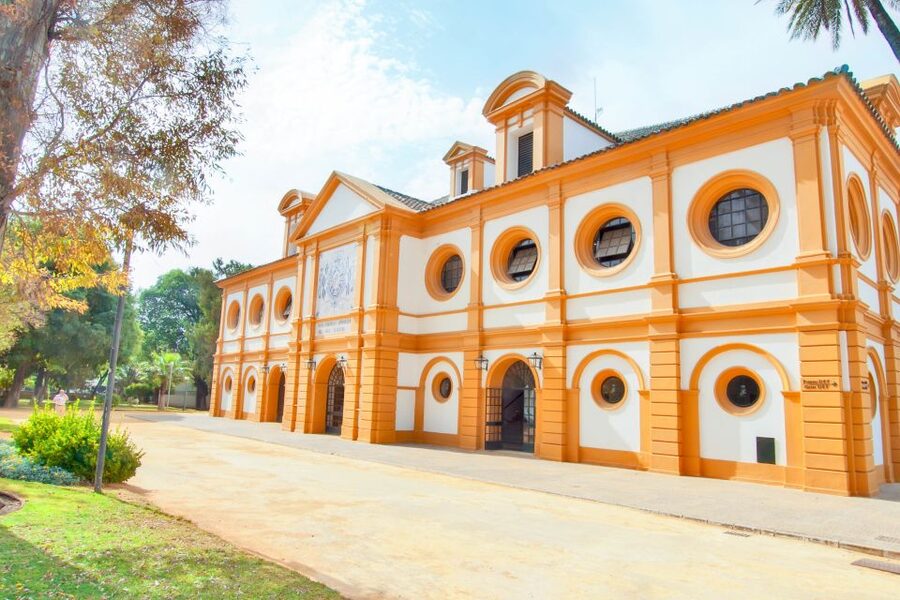
If training is taking place, it is often the most compelling part of the visit. You may watch horses and riders in the outdoor exercise rings or see activity in the indoor arena, a building designed in an Andalusian style with room for 1,600 people. The arena is also where daily training takes place.
Training gives you a more grounded view of the school than a performance alone. You can observe the concentration of horse and rider, and see the work that sits behind the more elaborate movements associated with Andalusian equestrian art. Even a practice session can make clear that precision comes from repetition, timing, and trust.
The visit does not promise that you can touch a horse. Access and proximity can vary, and some parts of the stables are viewed from behind bars. You may get close enough to see the horses clearly, but go in prepared to observe rather than handle them.
Training and saddlery work are not available on Saturdays. The management can also alter the program, so treat the schedule as something to confirm rather than a guarantee. If watching horses work is your chief reason for coming, check the day’s availability before booking.
Rules on photography may also vary by area. A visitor has been told not to take pictures inside the arena, so be ready to put your camera away if asked. The horses are worth watching with your eyes, anyway.
In the stables, look beyond the horses
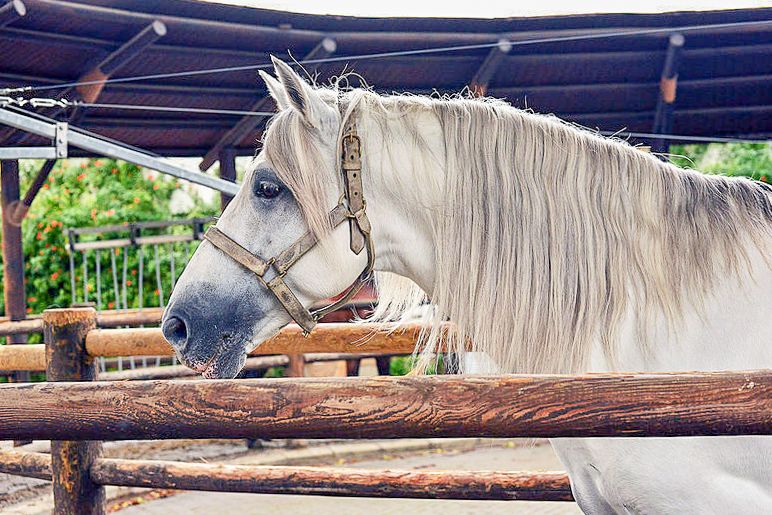
The stables form an octagonal complex, with the tack room at the center. Here you can see some of the school’s most emblematic horses and get a closer sense of the facilities used to house and prepare them.
The clean, orderly setting is part of what makes the visit interesting. You are not just seeing beautiful animals; you are also seeing the routines and equipment that support their training. Guides can answer questions about the horses and their care, so save a few for this part of the tour.
The stable visit is guided rather than an area to wander through on your own. Guides lead in Spanish, English, French, and German, though the start time for a particular language can vary. In one case, an English tour began at 11:15 rather than at the expected time, so leave room for a possible wait and use it to explore the public areas.
Past guides have included Javi, Elena, and Harry, but you should not expect a particular person on your visit. What matters most is that the guide can explain the school’s routines and answer questions in a language you understand. If a tour is delayed or a group is combined, the horse training and exhibits still give you plenty to see.
Finish with the carriages and costumes
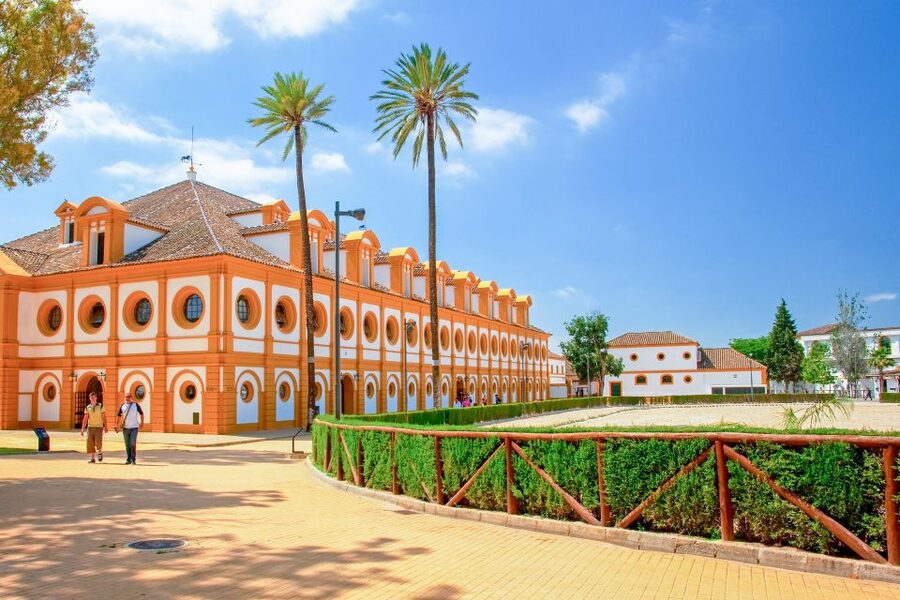
The carriage museum is the final stop. Its collection includes vehicles, horses, harnesses, and equestrian costumes, bringing together the practical and ceremonial sides of the school’s tradition.
It is an easy part of the route to overlook if the heat is wearing you down or you have spent extra time watching training. The collection is included in the admission, so I would try to leave enough energy for it. It gives you a different way to appreciate the care and detail that go into equestrian display.
The carriage museum is set a little apart from the stables and other museum spaces. Take that into account when pacing your visit, especially on a hot day. Some visitors have skipped it because of the heat, but you will miss part of the school’s collection if you do.
Make the two-hour visit work for you
The stated duration is about two hours, a reasonable starting point for the guided facilities and museums. If you stop to watch training, read exhibits, or spend time in the gardens, you may want longer. Some people have spent nearly four hours exploring the grounds and watching activity.
Arrive with a rough plan: check whether the introductory presentation is running at your arrival time, confirm the language and timing of the guided visit, and find out whether training is scheduled that day. If your preferred tour language is not starting immediately, the palace, gardens, or museum may help fill the gap.
The school is wheelchair accessible. Bring your booking confirmation, printed or on your phone, to the ticket office. If you have bought a discounted ticket, you must show proof that you qualify when collecting it, or you may have to pay the difference if standard tickets are still available.
Do not bring bottles, cans, animals, or objects the management considers unsuitable onto the grounds. The program may also change. The café has been limited in its offerings or closed at times, so I would not count on it as your only plan for food or a drink.
Who should book this visit?
I would put this near the top of the list for horse lovers, especially if you want to see Andalusian horses outside a formal performance. It also suits visitors interested in craft, regional traditions, or architecture, since the school combines a working stable complex with a palace, gardens, and museums.
For families, the horses and interactive displays may hold attention, but the visit still involves guided sections and museum time. People with no particular interest in horses can enjoy the setting and collections, though the school’s equestrian focus is central throughout.
Book this admission if you want to see how the school works and can plan around the training schedule. Choose a separate performance ticket if your priority is a staged show. For the best chance of seeing several sides of the school, avoid Saturday, allow at least two hours, and leave extra time if you like to linger.
FAQ
How long does the visit take?
The stated duration is about two hours. You may want longer if you spend extra time in the gardens, museums, or watching training.
Is the horse show included in admission?
No. This ticket covers admission to the school facilities. A horse show is a separate experience.
Can I watch the horses training?
Training takes place in the outdoor exercise rings and indoor arena, except Saturdays. The program can change, so check what is scheduled for your visit.
Is the saddlery open to visitors on Saturdays?
Saddlery work is not available to see on Saturdays. The listed training activity is also not available that day.
What languages are available for the guided tour?
Guides are available in Spanish, English, French, and German. The starting time for a tour in a particular language may vary.
Is the school wheelchair accessible?
Yes, the activity is listed as wheelchair accessible.
What should I bring to the ticket office?
Bring your printed receipt or show it on your mobile. If you bought a discounted ticket, bring proof of eligibility.
Newest tours in Jerez De La Frontera
- Founder Winery: TOUR GASTRO EXPERIENCE★ 4.9 · 8 reviews
- Flamenco Show at La Guarida del Angel with Drink★ 4.6 · 27 reviews
- Jerez: Traditional Tapas Tour★ 4.6 · 138 reviews
- Jerez: Flamenco Show and Menú at Tablao Puro Arte 2025★ 4.5 · 213 reviews
- Jerez: Bodegas Álvaro Domecq Guided Tour with Wine Tasting★ 4.6 · 265 reviews
- Jerez: Historic Center Guided Tour★ 4.5 · 272 reviews
- Jerez de la Frontera: Sherry Winery Tour with Tasting★ 4.6 · 309 reviews
- Jerez: Bodegas Fundador Guided Tour with Tasting Session★ 4.8 · 714 reviews
Andalusian Horse Shows, compared.

Jerez & Cadiz Winery with Tasting & Opt Horse Show from Seville
Read our review →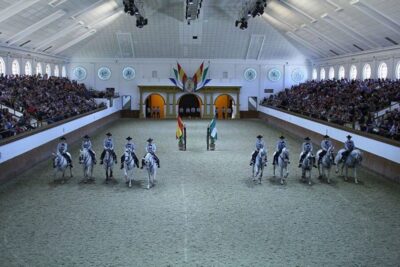
Browse the lists this tour appears in