
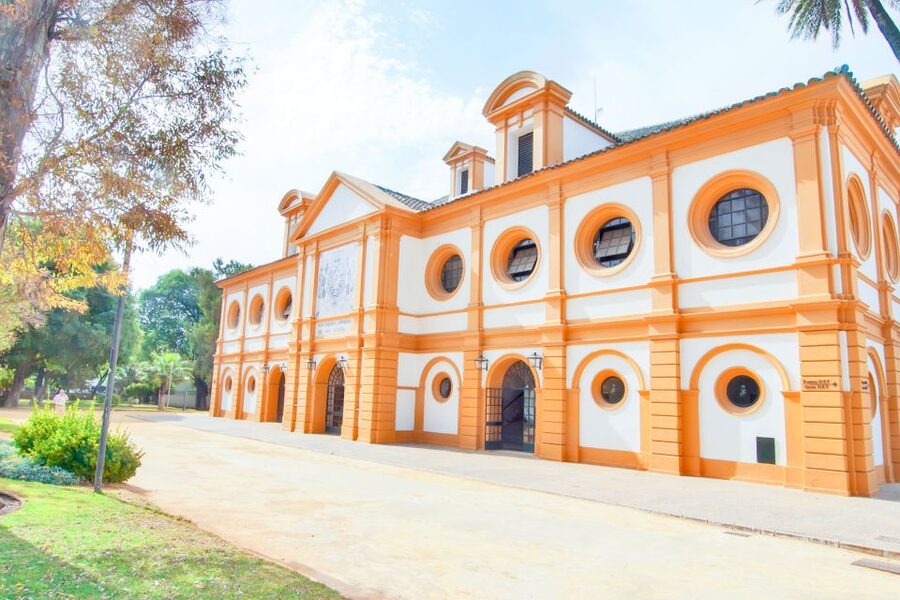
Review · ANDALUSIAN HORSE SHOWS
Jerez de la Frontera: How the Andalusian Horses Dance
The horses do more than trot neatly around an arena. At Jerez’s Royal Andalusian School of Equestrian Art, they perform precise dressage movements, cattle-riding maneuvers, carriage work, and group routines in an equestrian ballet built around Spanish horsemanship.
I like two things in particular: the variety of riding styles, which gives the show a clear link to working traditions as well as classical dressage, and the formal presentation, with Spanish music and 18th-century-style costumes. The setting is part of the appeal too: this is a performance by a school devoted to the art, not simply a horse show assembled for an evening’s entertainment.
One consideration: this is a specialized performance, and the exact program can change. If you are not interested in horses or dance-like displays of skill, the choreography may feel less compelling than a visit centered on Jerez’s food, wine, or historic sights.
What Makes This Jerez Horse Show Special
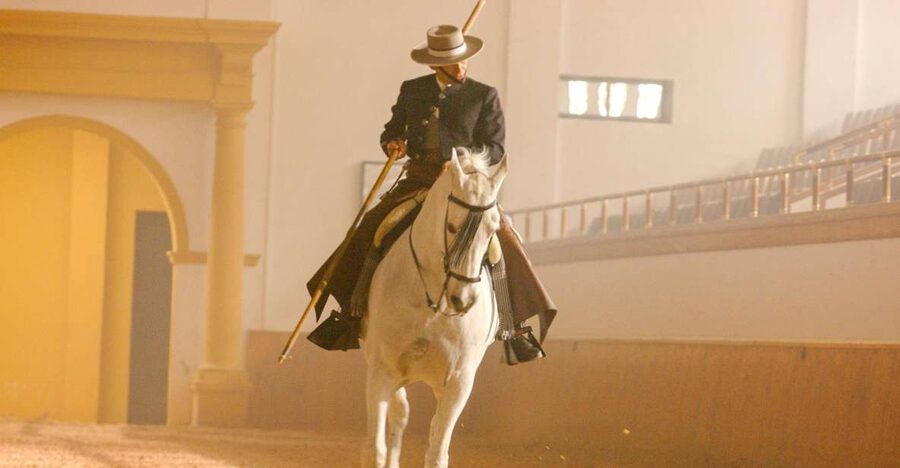
- Six to eight choreographies draw on classical dressage, Doma Vaquera, carriage driving, and other equestrian traditions.
- Spanish riding skills are the main event, from pirouettes and sudden gallops to synchronized group work.
- The horses perform without a rider in the saddle during the work-in-hand section, following commands through advanced movements.
- Traditional presentation matters: Spanish music and 18th-century-style costumes give the arena a formal, theatrical feel.
- The final carousel brings a group of horses and riders together for coordinated exercises.
- Tickets start at $31 per person, and the show runs about 90 minutes to two hours.
A Performance Rooted in Andalusian Horsemanship
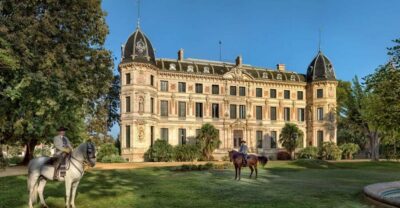
The show takes place at the Fundación Real Escuela Andaluza del Arte Ecuestre, or Foundation Royal Andalusian School of Equestrian Art, in Jerez de la Frontera. Its name signals the focus: this is a school with a defined equestrian tradition, and the performance presents that craft through a sequence of choreographed demonstrations.
Think of it as a ballet in which the horses are the stars, but the riders’ control is just as important. The program combines movements from classical dressage with Doma Vaquera, the Spanish country-riding style associated with cattle herding, plus traditional equestrian tasks. The result moves between elegance and practical skill.
The music and costumes help frame what you see. Spanish music sets the pace, while the riders’ 18th-century-style dress lends the performance a ceremonial air. These details are not just decoration: they make the show feel connected to an older tradition of horsemanship, even as the horses execute highly controlled movements in a modern performance setting.
Each show includes six to eight choreographies chosen from the school’s repertoire. That gives the program room to vary, so it is best not to arrive expecting every named routine on every date. The management can change the program, and the order and selection are scheduled by the school.
More horse shows in Jerez de la Frontera:
- Jerez: Royal Andalusian School of Equestrian Art Admission
★ 4.6 · 882 reviews - Cordoba: Equestrian Show General Entry
★ 4.5 · 2,333 reviews - Andalusian Horses Dance Show
★ 4.5 · 483 reviews
Doma Vaquera: Country Riding at a Gallop
Doma Vaquera is one of the show’s most distinctive sections because it comes from a working style of riding rather than the formal arena alone. Traditionally linked to cattle herding, it asks the rider to control the horse while moving quickly and changing pace.
In the arena, the horseman rides using one hand. The horse begins at a trot, then moves into a gallop, with the rider shifting the rhythm and directing turns, pirouettes, and arreones, sudden bursts into a gallop. The contrast between measured control and quick acceleration is the point.
This section is a useful reminder that Andalusian horsemanship has practical roots. You are not watching only a set of polished tricks; you are seeing skills shaped by a particular kind of riding. If you enjoy understanding how an athletic display connects to everyday work, watch how the rider’s hands and posture guide the horse through changes in speed.
Classical Dressage: Precision in Motion
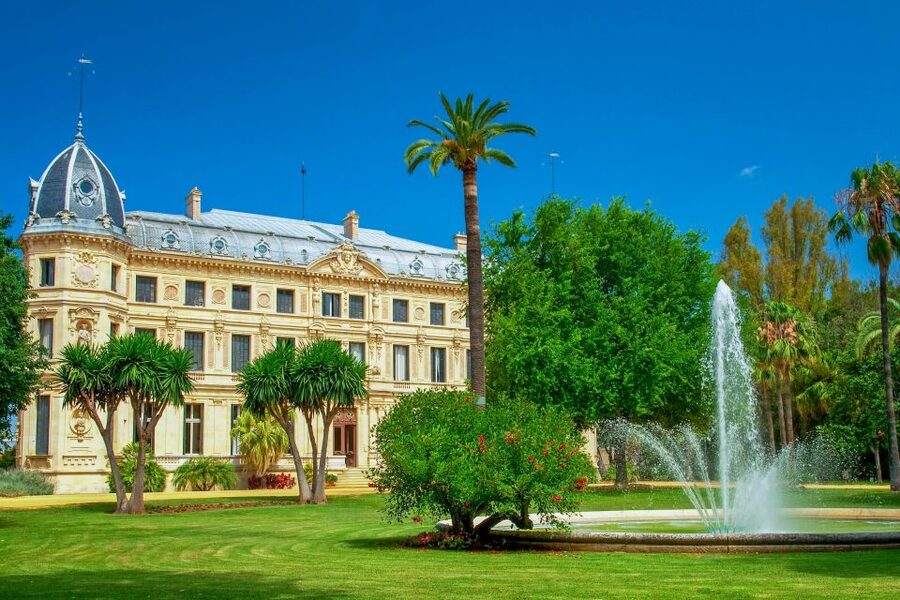
Classical dressage supplies the show’s most ballet-like moments. Horses carry out advanced exercises to classical music, with movements that require careful timing and a close partnership between horse and rider.
The repertoire may include The Colts, Airs on Horseback, Pas de Deux, Passage and Piaffer, Domino on Horseback, Airs Above the Ground, and Fantasy. Not every performance is guaranteed to include all of them. Names aside, look for changes in pace and posture, and for the horse’s response to small signals from the rider.
The Pas de Deux is especially easy to appreciate as a spectator: it places two horses and riders in a coordinated routine, making the timing between them part of the spectacle. Passage and piaffer showcase controlled, elevated steps, while Airs Above the Ground refers to particularly demanding movements. You do not need to know dressage terminology to see the difficulty. The striking part is how deliberate the movements appear, even when they require considerable strength and control.
If you already follow dressage, you may find more to notice in the precision of each movement. If you are new to it, let the music and the overall pattern do the work. The show offers a visual introduction, not a lesson in every technical detail.
Work in Hand: The Rider Steps Away
In the work-in-hand section, the horse obeys its handler without a rider in the saddle. That change is worth watching closely: it shifts your attention from the mounted partnership to the communication between horse and person on the ground.
The horses may perform Haute École exercises such as the levade, capriole, courbette, piaffe between pillars, and Spanish walk. These are specialized movements, so the pleasure is partly in seeing a horse respond to careful direction and partly in watching the handler’s timing.
This is one of the show’s clearest demonstrations of training. It can also be the least familiar section if you have never seen classical dressage before. Rather than trying to identify every movement, notice how the horse holds its balance and how much control is required to repeat a precise action on cue.
More horse rides in Jerez de la Frontera:
- Jerez de la Frontera: Andalusian Horse Dance and Museums
★ 4.7 · 1,289 reviews - Jerez: Yeguada de la Cartuja Carthusian Horses Tour
★ 4.8 · 970 reviews - Horse-Drawn Carriage Ride Through Seville
★ 4.3 · 404 reviews - Seville: Authentic and Romantic Horse-Drawn Carriage Ride
★ 4.5 · 341 reviews
Carriage Driving: A Different Kind of Teamwork
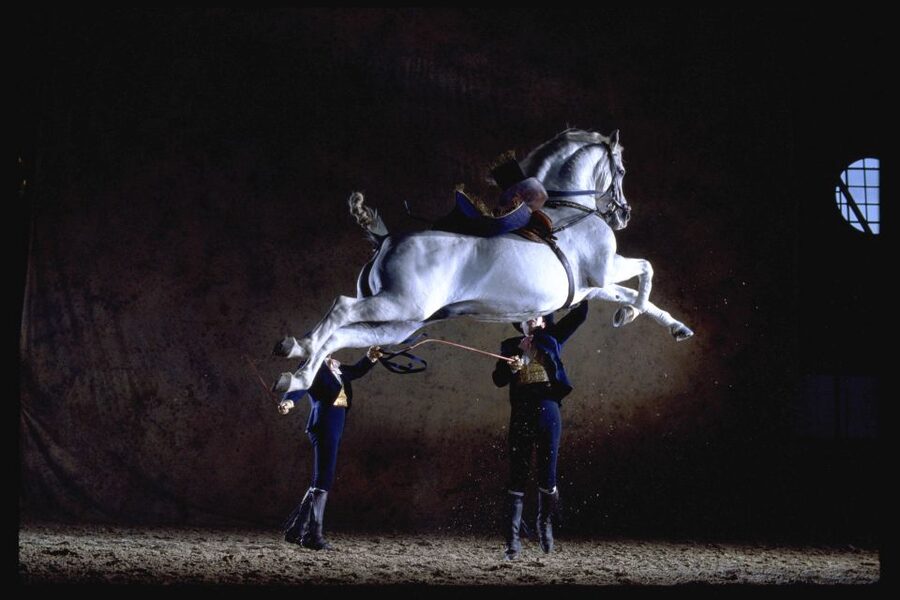
Carriage driving changes the focus from a single rider and horse to horses drawing a carriage under harness. The carriages were once a form of transport, but here the emphasis is on sport and display.
Coachmen guide the horses using classical harnesses and demonstrate control while the carriage moves around the arena. It is a fresh visual rhythm after the close, controlled movements of dressage: more equipment, a wider team, and a different set of skills to follow.
This part will matter most if you are interested in traditional transport or the practical side of equestrian life. If your attention is mainly on the horses’ individual movements, it may feel less intimate than the dressage routines. Still, it adds useful variety and shows that the school’s repertoire reaches beyond riding.
The Carousel: A Coordinated Finish
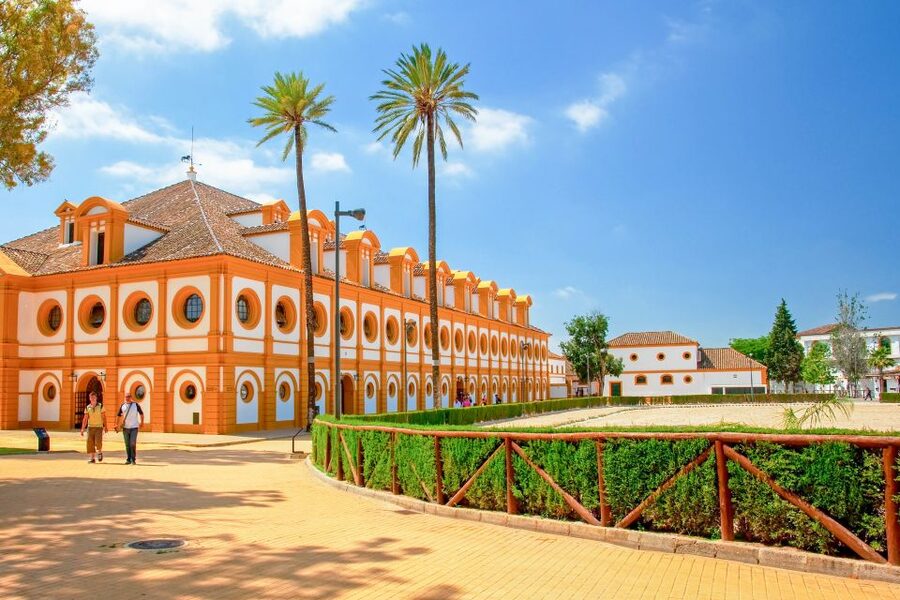
The carrousel brings a group of horses and riders together for advanced exercises performed in unison. It works as a finale because the focus expands from one horse or pair to a whole group moving together.
Watch for the shared pace and spacing. A coordinated group routine can look effortless from the seats, but the timing is what makes it satisfying. The horses and riders must work in step, and small differences become visible when several pairs cross the arena at once.
The carousel also gives the program a strong ending. After individual demonstrations of dressage, cattle-style riding, work in hand, and carriage driving, the group performance gathers the show’s main idea into one final display: skill is both individual and shared.
The Setting, Seats, and Time to Allow
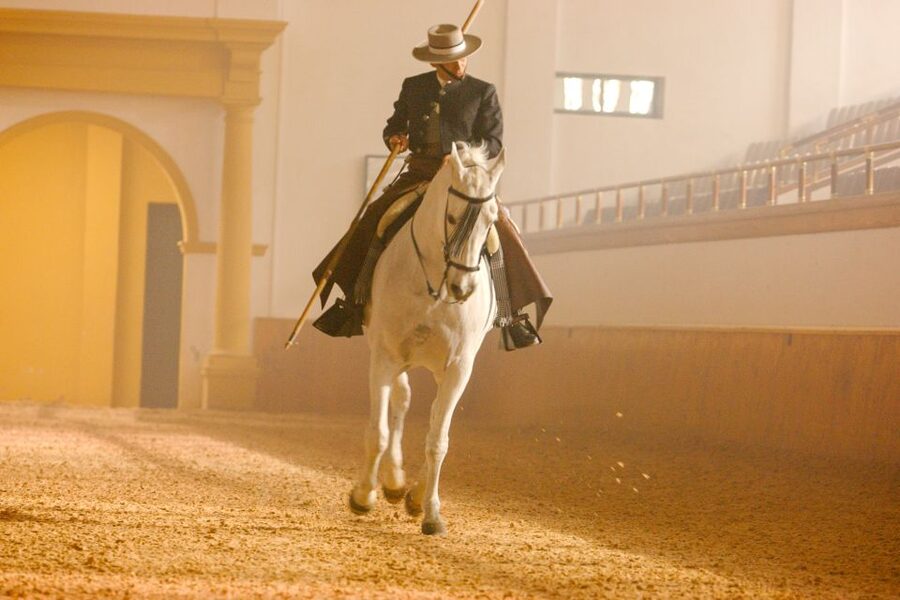
Plan for 90 minutes to two hours for the performance. The exact starting time depends on availability, so check the date and time when booking. You collect your ticket at the Reservation Box Office at the Royal Andalusian School of Equestrian Art Foundation.
The ticket includes entrance to the show. Some people have also enjoyed walking the grounds or seeing riders and trainers at work, but that should not be treated as a guaranteed part of the ticket or a scheduled tour. If you have time around the performance, you can see what is open on the day; keep your main expectation focused on the arena show.
Tickets are sold by price category, not by a choice of row or seat number. Seats are allocated according to the order of purchase or booking. That makes early booking the sensible choice if you want the best available allocation, though the performance has been described as offering good views from the seats.
Bring a printed voucher to the ticket office, along with your passport or ID card. If you bought a discounted ticket, bring proof that you qualify for the discount. Without it, you may have to pay the difference to the standard ticket price, if standard tickets are still available.
The venue is wheelchair accessible. Pets, flash photography, glass objects, audio recording, weapons, and sharp objects are not allowed. Bottles and cans are also prohibited, along with other objects management considers unsuitable. Leave your camera flash off: the horses are performing, not posing for a studio portrait.
Is $31 Good Value?
At $31 per person, the show is a fair-value choice if you want a substantial, organized cultural performance rather than a brief demonstration. You get a program lasting up to two hours, with several different styles of riding and a full arena presentation.
The value depends on what you enjoy. Horse lovers, dressage fans, and anyone curious about Andalusian riding traditions are likely to find plenty to watch. The shifting routines also help keep the program varied. If you are indifferent to horses, the same price might be better spent on an experience more closely tied to your interests.
The show has a strong reputation for professional presentation, and its appeal seems to hold up over time. Some people return after many years and still find the performance worthwhile. That is a useful sign for a visitor weighing the ticket against other things to do in Jerez, though it does not mean every choreography will suit every taste.
For older adults, reduced-price tickets may be available, but you must show proof of eligibility at the ticket office. Prices and availability can change, so check the terms for your date before making plans.
Getting There from Cádiz and Planning Your Visit
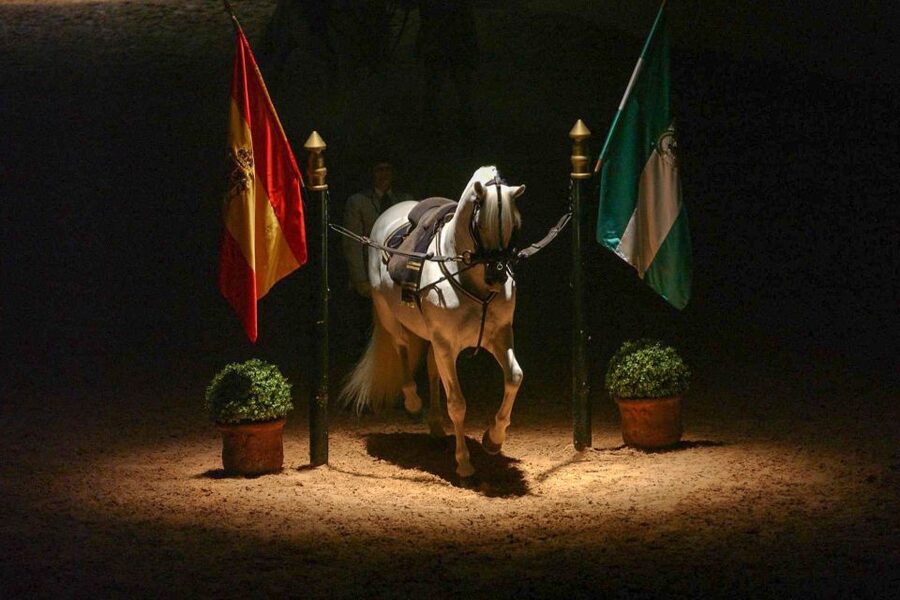
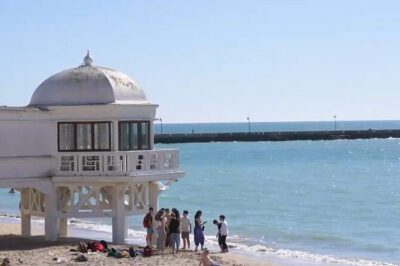
If you are staying in Cádiz, a train to Jerez followed by a taxi to the school is one practical way to make the trip. Check current train times and local taxi arrangements before you set out, especially if you are going for a performance with a fixed start time.
Allow time to find the Reservation Box Office and collect your ticket. Since the printed voucher is essential, do not rely on being able to show only a digital copy. Keep your ID handy as well, particularly if you have a discounted ticket.
A separate 50th-anniversary gala has been announced for June 30 and July 1 at 9 p.m., featuring the equestrian schools of Austria, France, Spain, and Portugal, along with the Abu Dhabi International Riding School. It is planned as a special event, with seating for 4,000 in an outdoor arena and a leisure and catering area. Treat this as a distinct performance, not as part of the regular show, and confirm that it is scheduled for your travel dates before planning around it.
Who Will Enjoy the Show Most?
I would put this near the top of the list for horse enthusiasts, people who follow dressage, and visitors who want to see a performance rooted in local riding traditions. The mix of classical and working styles gives you more than one kind of horsemanship to appreciate.
It also suits a mixed group if some people are keen on horses and others simply like music, costumes, and a well-organized arena show. The visual nature of the performance makes it accessible even if you do not know the technical names of the movements.
It is a weaker fit if you want a hands-on activity, a guided historical tour, or a guaranteed look behind the scenes. The ticket is for the show, and the repertoire can change. If you go in expecting a live performance rather than a tour of the school, you will have the right frame of mind.
Should You Book?
Book if you have an interest in horses, dressage, or Spanish equestrian culture. The appeal lies in the range of skills on display, from a one-handed gallop in Doma Vaquera to the precise work of classical dressage and the final group carousel. At $31, the length and variety make it a sound use of an evening or afternoon.
Skip it if horse performances are not your thing, or if you need a fixed program with every named routine guaranteed. Check the time, confirm the performance date, and bring the printed voucher and ID. For the right audience, this is a polished way to see Andalusian horsemanship in its own home.
FAQ
How long does the show last?
The performance lasts between 90 minutes and two hours. Check the available starting times for your chosen date.
What is included in the ticket?
The ticket includes entrance to the show.
Where do I collect my ticket?
Go to the Reservation Box Office at the Royal Andalusian School of Equestrian Art Foundation.
Do I need to bring a printed voucher?
Yes. You must present your printed voucher at the ticket office.
Do I need identification?
Bring your passport or ID card. If you bought a discounted ticket, bring proof that you qualify for the discount.
Can I choose my seat?
Tickets are sold by price category, without a choice of row or seat number. Seats are allocated according to the order of purchase or booking.
Is the venue wheelchair accessible?
Yes, the venue is wheelchair accessible.
Can I take photographs or bring a pet?
Pets are not allowed, and flash photography is prohibited. Audio recording is also not allowed.
Can I cancel my booking?
You can cancel up to 24 hours in advance for a full refund.
Newest tours in Jerez de la Frontera
- Founder Winery: TOUR GASTRO EXPERIENCE★ 4.9 · 8 reviews
- Flamenco Show at La Guarida del Angel with Drink★ 4.6 · 27 reviews
- Jerez: Traditional Tapas Tour★ 4.6 · 138 reviews
- Jerez: Flamenco Show and Menú at Tablao Puro Arte 2025★ 4.5 · 213 reviews
- Jerez: Bodegas Álvaro Domecq Guided Tour with Wine Tasting★ 4.6 · 265 reviews
- Jerez: Historic Center Guided Tour★ 4.5 · 272 reviews
- Jerez de la Frontera: Sherry Winery Tour with Tasting★ 4.6 · 309 reviews
- Jerez: Bodegas Fundador Guided Tour with Tasting Session★ 4.8 · 714 reviews
Andalusian Horse Shows, compared.
Royal Andalusian School of Equestrian Art Admission
Read our review →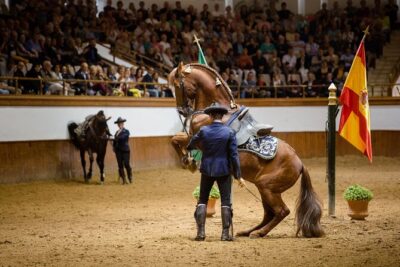
Jerez & Cadiz Winery with Tasting & Opt Horse Show from Seville
Read our review →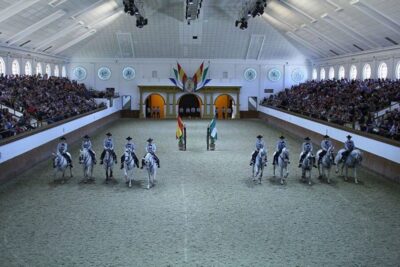
Browse the lists this tour appears in