
Review · ITALICA TOURS
Historical Italica: Half-Day Guided Tour from Seville
Just outside Seville, Italica puts Roman streets, grand houses, intricate floor mosaics, and a huge amphitheater within easy reach of the city. This half-day trip pairs the archaeological site with a visit to San Isidoro del Campo, a former monastery that adds a very different chapter to the day.
I like two things in particular: the remarkable mosaics and remains of upper-class Roman homes, which make the city feel more than a field of ruins, and the short shared transfer, which lets you spend your time exploring rather than arranging transport. Guides including Rebecca, Jesús, Miguel, and Leon have brought the site to life with vivid explanations and stories.
The main caveat is that the monastery will not be everyone’s cup of tea, and the trip’s schedule can be affected by late pickups. Bring water, especially in hot weather, and allow a little flexibility if you need to return to Seville by a strict time.
- Italica is close to Seville: The bus ride is about 15 to 20 minutes, making this an efficient half-day escape.
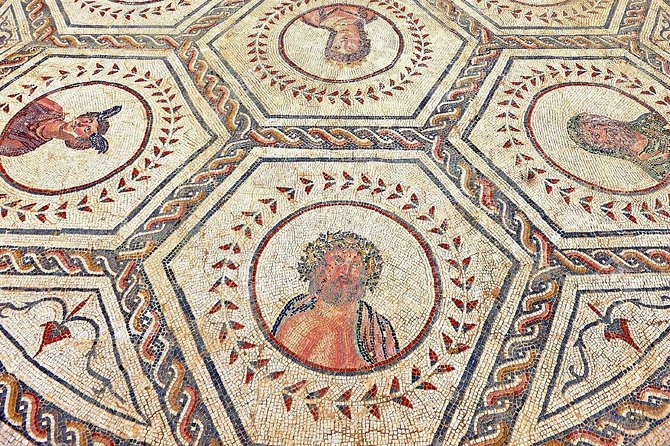
- The mosaics are a major draw: Roman house floors preserve detailed patterns that are easy to miss without time to look closely.
- The amphitheater is immense: The site’s headline monument is said to have held up to 25,000 spectators.
- San Isidoro del Campo is included: Expect a second historical stop, though its appeal depends on your interest in religious art and architecture.
- Transport and admission are included: The $47.18 price covers shared round-trip transport, a professional guide, and taxes.
- Pack water and keep time flexible: Food and drinks are not included, and some outings have run late.
Italica makes Roman Spain feel close
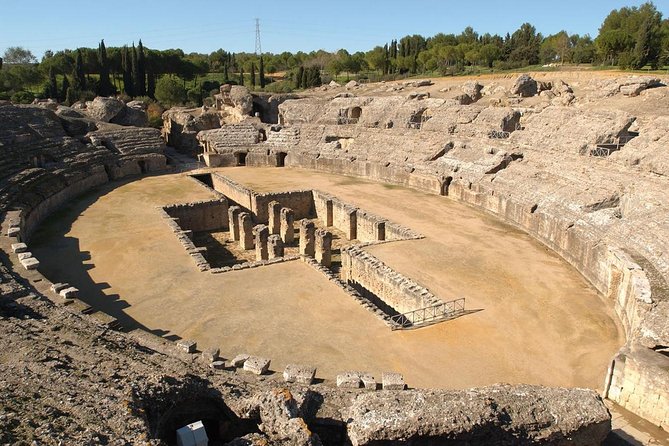
Italica is often described as the first Roman settlement on the Iberian Peninsula, and its location just beyond Seville makes it an easy way to add Roman archaeology to a city break. You do not have to give up a full day or plan a complicated journey to see it. The drive is short, leaving most of the tour for the ruins themselves.
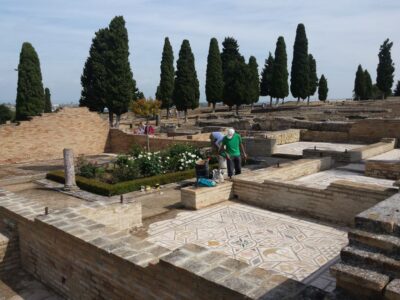
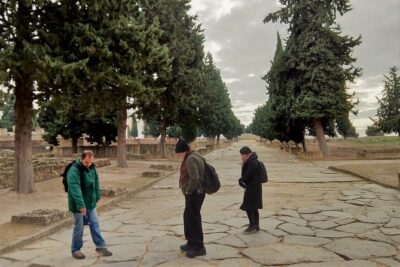
The site is more than one headline monument. You can walk among the remains of the ancient city, look into the layouts of domus, or upper-class homes, and pause over the mosaics that once covered their floors. These details help you picture daily life, not just public spectacles. A good guide can connect the pattern under your feet to the wider story of Roman settlement.
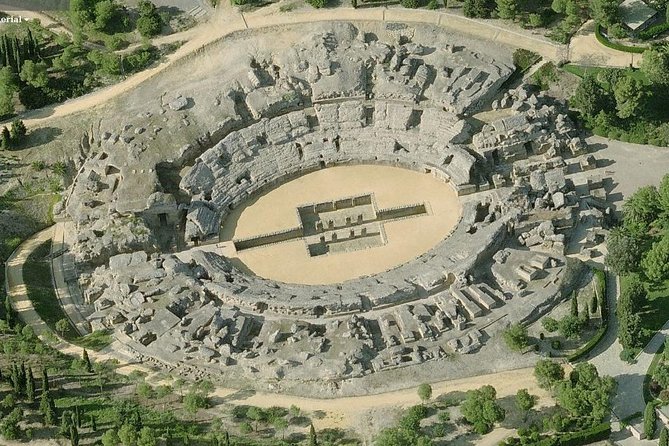
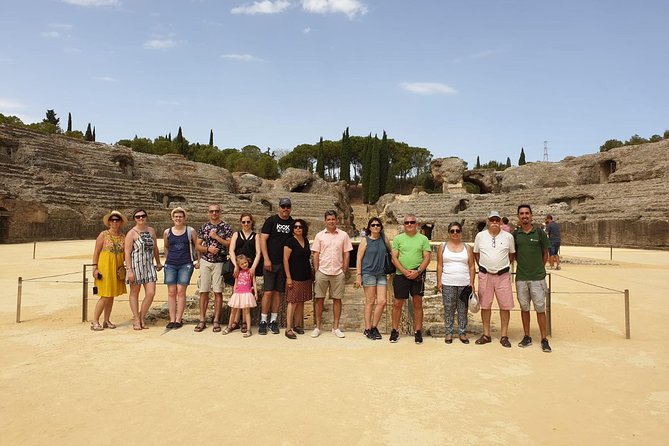
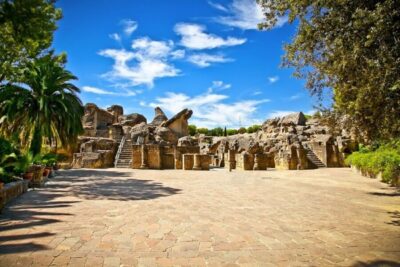
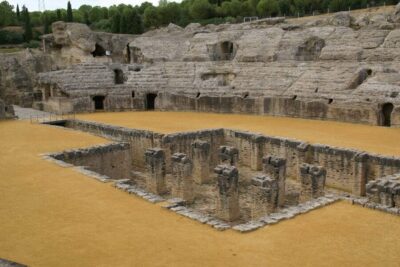
The amphitheater is the dramatic centerpiece. Its scale is the first thing to grasp: the site is described as capable of holding 25,000 spectators, a striking figure for a place only a short ride from Seville. The experience is less about polished reconstruction than seeing the footprint and remains of a vast public venue in its setting.
The archaeological ensemble also includes a Roman theater, mosaics, and a medieval monastery. The names can be easy to mix up, so listen for the guide’s explanation of which structure you are seeing. One visitor reported not getting to the theater or baths, so if either is a must for you, ask your guide what the group will cover that day.
A guided walk helps the ruins make sense
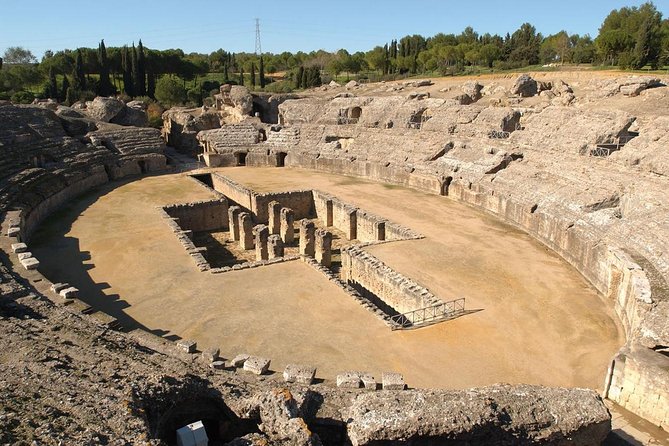
Italica’s ruins reward a slow look, but some of the most interesting details are not self-explanatory. A guide can point out what makes a house distinct, what the mosaics reveal, and how the site fits into Roman history on the peninsula. That context is especially useful if you have not read much about Roman Spain before arriving.
The strongest tours appear to make history tangible through storytelling. Guides named Jesús, Rebecca, Juanra, Miguel, Leon, Alberto, and Inez have led outings, with visitors praising their energy, clear explanations, and ability to make ancient streets feel inhabited. The assigned guide can vary, of course, and the quality of the English explanation has not been consistent for every group.
If you already know Roman history well, you may want more detail than a general half-day outing can provide. One account found some historical explanations oversimplified, particularly around the Punic Wars and the Reconquista. That is a fair caution: a short tour needs to keep moving, and a general introduction is not the same as a specialist lecture. If you want a more nuanced account, use the tour as a starting point and read further afterward.
A useful feature of some outings is a little free time at Italica. That gives you a chance to return to a mosaic or take photos after the guide has explained the site. The amount of independent time can vary, so if you like to linger, ask how the visit is timed before the walk begins.
More Italica tours in Seville:
- From Seville: Italica Roman City & Medieval Monastery Tour
★ 4.5 · 1,051 reviews - Seville: Game of Thrones and Roman Empire Italica Tour
★ 4.3 · 372 reviews - Visit to Italica Roman Ruins Tour tickets included
★ 4.5 · 285 reviews
Look closely at the houses and mosaics
The mosaic floors are among the best reasons to visit. They bring color and craft into a site otherwise defined by open ground and weathered stone. Some of the homes have been restored enough to show how large and carefully arranged the upper-class residences were. You can start to imagine a city of private courtyards and decorated rooms rather than a collection of disconnected foundations.
The mosaics also reward attention to detail. A quick pass may register them as pretty patterns; a guide can point out their designs and explain where they sat within a home. Even if you have visited Roman sites elsewhere, Italica offers a different perspective from the better-known monuments of Rome. Here, the remains sit outside a modern city, and the domestic spaces are part of the appeal.
Do not expect every structure to be fully rebuilt or every area to be open. Italica is an archaeological site, and the visible remains are a mix of preserved features and excavated spaces. Work was underway in parts of the site during one visit, a reminder that archaeological understanding can change as research continues.
The amphitheater is the big moment
The amphitheater gives the visit its sense of scale. Its enormous footprint helps you understand how public entertainment shaped Roman life, while the tunnels beneath the remains offer another way to read the structure. The advertised capacity of up to 25,000 spectators makes it easy to imagine the crowds, even if the standing remains do not recreate the original spectacle.
This is where a guide’s storytelling can make a real difference. Rather than simply walking around the stone, you can learn what different parts of the building were for and how its design handled movement through the venue. If you are especially interested in the amphitheater, keep track of the group’s pace and ask questions while you are there. One visitor’s disappointment at missing the theater and baths shows why it is sensible to confirm what the day’s route includes.
There is a practical side to the open-air setting: shade can be limited. August heat was enough to leave one visitor moving from shadow to shadow, and another reported feeling dehydrated on a hot day. Bring water and sun protection. Food and drinks are not included, so do not count on refreshments being supplied.
San Isidoro del Campo adds a different chapter
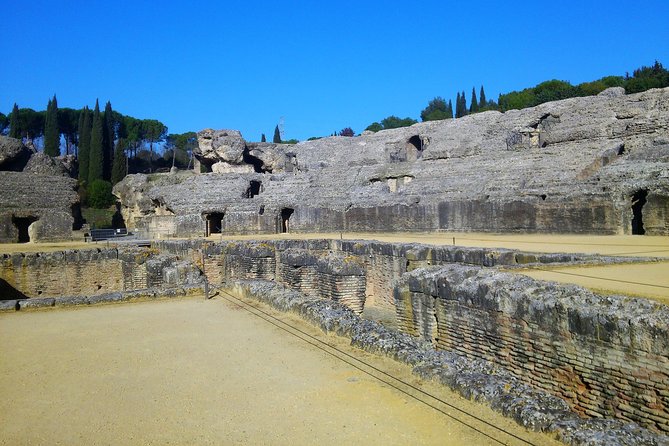
The monastery visit broadens the day beyond Roman Italica. San Isidoro del Campo is described as a former fortress monastery, and it gives you a look at a later religious and architectural period. Some guides provide a detailed account of its history, and one visitor was pleasantly surprised by how much the visit included beyond a walk around the church.
How much you enjoy this stop depends on your interests. If you like religious art, church history, or seeing how a historic building changed over time, the monastery may be a welcome bonus. If your main goal is Roman archaeology, it can feel like an extra stop after the site you came to see. A few visitors found it less engaging than Italica, while others considered it a highlight.
The monastery and Italica are distinct experiences, not two versions of the same attraction. Think of the stop as a chance to compare different layers of the region’s past. If you would rather spend every available minute among Roman ruins, this may not be the ideal format for you. On this tour, however, the monastery visit is part of the package.
More history tours in Seville:
- Sevilla Food Tour: Tapas, Wine, History & Traditions
★ 5.0 · 3,468 reviews - Ultimate Seville Tapas, Wine & History Small Group Tour
★ 5.0 · 1,766 reviews - Córdoba: Skip-the-Line Great Mosque-Cathedral History Tour
★ 4.7 · 1,690 reviews - Seville: Tapas, Taverns, and History Walking Tour
★ 4.9 · 676 reviews
Four hours, shared transport, and a few timing cautions
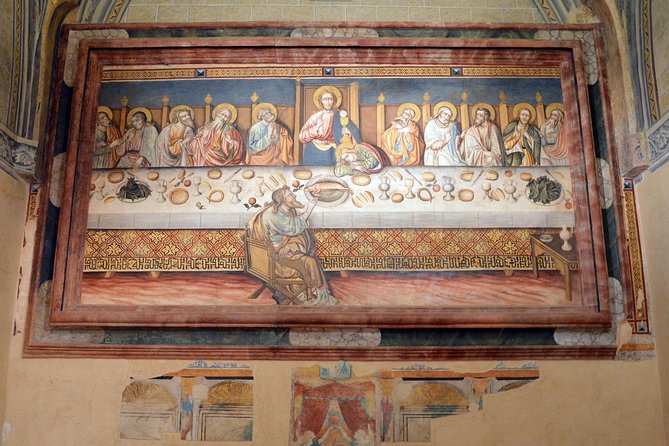
The tour lasts about four hours, including shared round-trip transport from Seville. A short drive of roughly 15 to 20 minutes each way means little of the day is spent in transit. One outing began with pickup around 10 a.m. and returned around 3 p.m., but that is an individual example, not a guaranteed timetable. Multiple pickup points or delays can add time.
That timing matters if you have a train, another tour, or a fixed dinner reservation. Some outings have been late returning, and one participant reported a 30-minute delay that cut into the visit. I would avoid booking this on a day when you need to leave Seville at a precise hour. The group can include up to 60 people, so the tour may feel more like a large guided outing than a small archaeological walk.
The English-language offering is helpful, but the guide’s command of English can vary. Most accounts describe engaging explanations, and some outings have divided into separate English, French, and Spanish groups. Others have involved language changes or a guide combining groups after a staffing problem. If clear English narration is essential to your visit, contact the operator to confirm the arrangements for your date.
It is worth asking about identification, too. One participant was not told to bring ID and was glad to have passport images on a phone. That does not establish a universal entry requirement, but checking the instructions before departure is a sensible precaution.
Is $47.18 good value?
At $47.18 per person, the price includes the guide, round-trip shared transfer, admission, and taxes. You are paying for more than the bus ride: the guided explanations can help you make sense of a large archaeological site, while the monastery visit adds another stop without requiring you to arrange separate transport.
If you are comfortable traveling independently, there is a cheaper alternative. One visitor reported taking a commuter bus from Seville for only a few euros and exploring with independent research. That option may suit someone with strong background knowledge and a flexible schedule. The guided tour is more appealing if you want transport organized, admission covered, and someone on site to explain what you are seeing.
The tour is booked, on average, 29 days ahead, so it is worth planning early if your dates are fixed. The stated maximum group size is 60, which helps set expectations: this is not a private or small-group experience. The tour has a 4.7 rating and is recommended by 93 percent of participants, but the practical issues around punctuality, language, and heat are still worth weighing.
Who should book this Italica tour?
I would choose this trip if you love Roman history, want to see the mosaics and amphitheater without planning local transport, or appreciate having a guide connect the remains to everyday life. It also suits a short stay in Seville: Italica is nearby, and the tour gives you a substantial archaeological visit without taking up a full day.
Think twice if you want a strictly Roman-focused outing, need a guaranteed return time, or prefer a small group. The monastery may be an added pleasure or an unnecessary detour, depending on your interests. For the best chance of enjoying the day, bring water, check the current meeting instructions, keep your return schedule open, and ask what parts of Italica are planned for your visit.
FAQ
How long is the tour?
The tour lasts approximately four hours. Actual timing can vary, and some outings have run late.
What language is the tour offered in?
The experience is offered in English. Language arrangements may vary by departure, so confirm them if English narration is essential for you.
What sites are included?
The tour visits Italica’s archaeological ensemble and San Isidoro del Campo monastery.
Is transportation included?
Yes. The price includes shared round-trip transport from Seville.
Is admission included?
Yes. Admission tickets are included for the stops.
Are food and drinks included?
No. Food and drinks are not included, so bring water, especially in hot weather.
How much does the tour cost?
The listed price is $47.18 per person.
Can I cancel for a refund?
You can cancel for a full refund up to 24 hours before the experience starts. Cancellations or changes made less than 24 hours before the start are not accepted, and the amount paid is not refunded.
More half-day trips in Seville
- Cordoba: Half-Day Medina Azahara Guided Tour
★ 4.6 · 288 reviews - From Seville: Half-Day Guided Bike Trip to Italica
★ 4.9 · 126 reviews - Half-Day Wine Tour in Andalusia in small group
★ 4.1 · 19 reviews
Newest tours in Seville
- Intimate Flamenco: Exclusive Experience in Sevilla★ 4.9 · 69 reviews
- Highlights of Seville Monuments private Guided Tour★ 4.9 · 4 reviews
- From Seville: Horseback Riding Experience in Aljarafe★ 4.3 · 51 reviews
- From Seville: Andalusian Horseback Ride★ 4.9 · 28 reviews
- Enchanted Seville: Private Walking Tour★ 4.6 · 3 reviews
- Heritage Córdoba: The most essential tour in Córdoba★ 5.0 · 8 reviews
- Guided tour of Cadiz in French with a local guide★ 5.0 · 43 reviews
- Guided visit on foot through Cádiz: stories from the hand of a local guide★ 4.9 · 62 reviews
Italica Tours, compared.
Visit to Italica Roman Ruins Tour tickets included
Read our review →
Browse the lists this tour appears in