
Review · ITALICA TOURS
From Seville: Italica Roman City & Medieval Monastery Tour
Italica’s vast amphitheater is the kind of place that makes Roman history feel physical: you can stand in the arena, look up at its tiers, and see the passages beneath where gladiators once waited. This four-hour trip from Seville pairs the Roman site with the nearby monastery of San Isidoro del Campo, making it a compact outing with two very different chapters of Andalusian history.
I like two things in particular: the guides bring the ruins to life, with names such as Miguel, Carlos, Alberto, and Jesús praised for clear explanations and lively storytelling; and the monastery adds a strong second act, not just another stop on the bus route. The mosaics and amphitheater are the main draw, while the monastery gives you a striking change of era and architecture.
The main consideration is the pace. The visit is guided and timed, so you may want more freedom to wander or photograph the amphitheater than the schedule allows. The archaeological site has limited facilities, food and drinks are not included, and the trip can run beyond four hours.
What makes this trip worth your time
- The amphitheater once held 25,000 people, and you can see its scale from the arena and the underground passages.
- Italica dates to 206 BC and is associated with emperors Trajan and Hadrian, both born there.
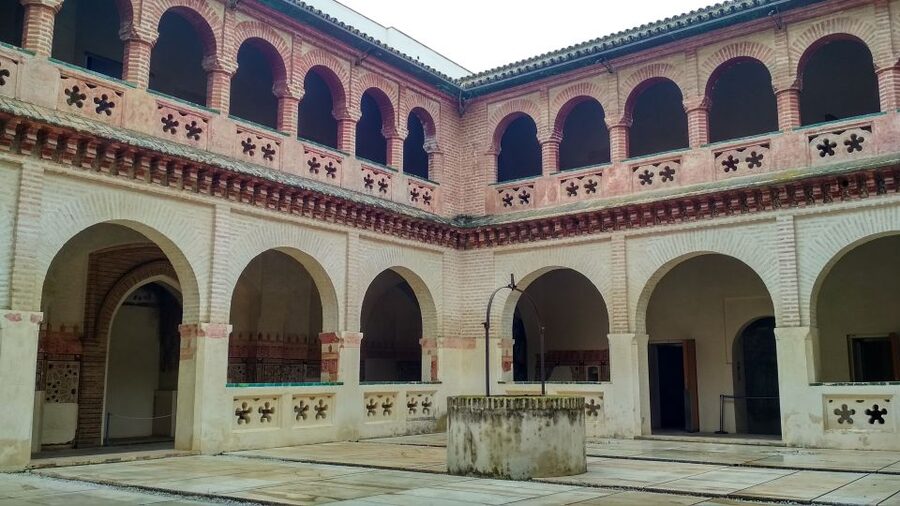
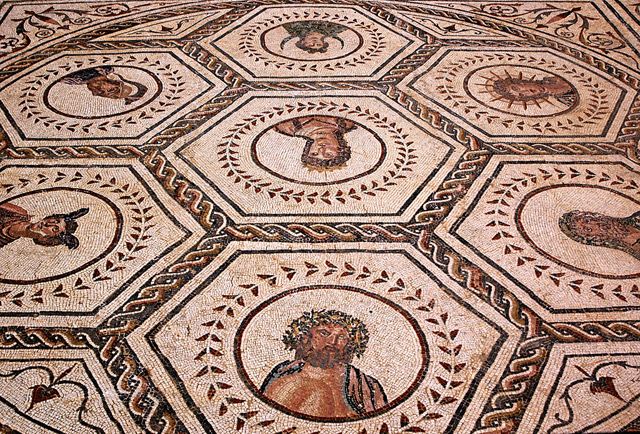
- The mosaics are a major highlight, with exceptionally well-preserved examples still in place.
- Game of Thrones fans will recognize the amphitheater as the Dragonpit, used for a key season seven scene.
- San Isidoro del Campo shifts the story forward to a medieval complex with Mudejar, Gothic, and Baroque details.
- Transport, entry tickets, and a guide are included, with shared and private options available.
From Seville to Italica in about 20 minutes
The tour begins at a meeting point in Seville, which depends on the option you book. Shared tours offer three meeting points in the city. A private tour can include pickup at your hotel or apartment if the address falls within the pickup area; otherwise, you will be given a nearby accessible meeting spot.
The drive to Italica takes about 20 minutes. That short transfer is part of the appeal: you can see a major Roman site without giving up an entire day or arranging transport yourself. Some tours use a comfortable coach, and shared departures may bring several groups together before dividing by language at the site.
The trip is offered in English, French, Italian, and Spanish. A language is guaranteed only when at least four people have booked it. If that minimum is not met, you may be offered another language, another date, or a full refund. Check the language arrangements before you book if they are central to your plans.
More Italica tours in Seville:
- Historical Italica: Half-Day Guided Tour from Seville
★ 4.5 · 416 reviews - Seville: Game of Thrones and Roman Empire Italica Tour
★ 4.3 · 372 reviews - Visit to Italica Roman Ruins Tour tickets included
★ 4.5 · 285 reviews
Walking Italica’s streets and mosaics
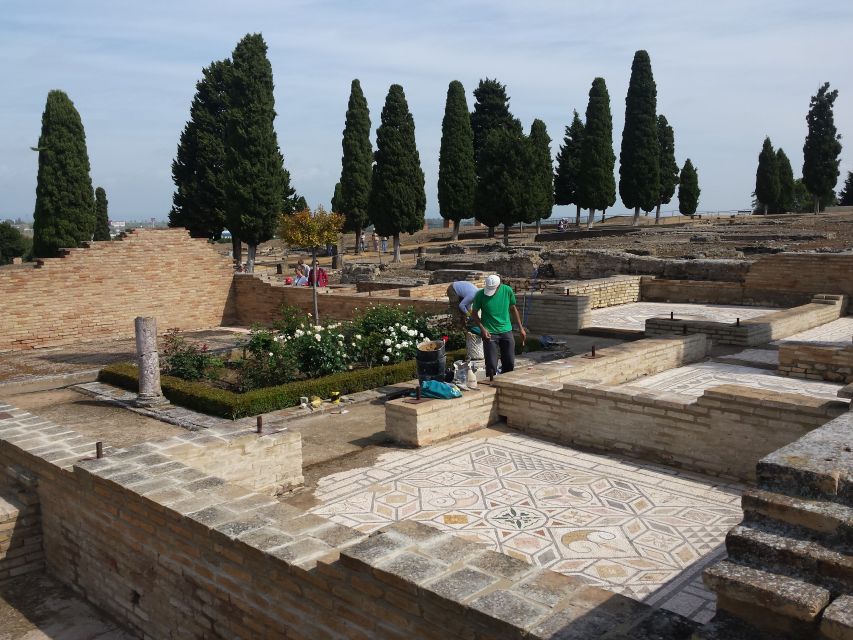
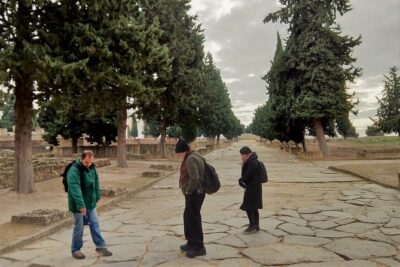
Italica was founded in 206 BC by the Roman general Publius Cornelius Scipio. It became one of the most important Roman archaeological sites in Spain and the birthplace of emperors Trajan and Hadrian. With a guide, the stones become easier to read: you hear how the city developed and what daily life may have looked like, rather than simply passing one ruin after another.
The guided visit lasts about 105 minutes. Expect to walk through the remains of the Roman city and see intricate mosaics, one of Italica’s most memorable features. Some of the original mosaics from the site are also displayed at Seville’s Palacio de la Condesa de Lebrija, a useful extra stop if you want to keep following the story after the tour.
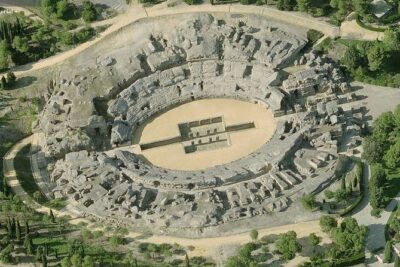
The amphitheater is the dramatic centerpiece. Its estimated capacity of 25,000 gives you a sense of the scale of Roman public entertainment, even when the surrounding site is quiet. You can see the arena and the passages beneath it, where gladiators once moved before combat, as well as the den where lions were kept.
The amphitheater has a second life for screen fans: it appeared as the Dragonpit in Game of Thrones, during a summit in season seven. That connection can add a bit of fun, but the real interest is the building itself. The stone structure, arena, and underways explain the spectacle without needing a television reference.
A guide matters here. The ruins are spread across an archaeological site, and the stories help connect the visible remains to the Roman city that once stood there. Guides such as Carlos, Miguel, Alberto, and Jesús have been singled out for their engaging delivery, historical detail, humor, and willingness to answer questions. Your guide will vary, of course, but the quality of the explanation is one of the trip’s strongest assets.
The tradeoff is that a guided visit has a set rhythm. Some people would like more time to return to the amphitheater, take photographs from different levels, or wander independently. If you prefer to explore at your own speed, treat this as a guided introduction rather than an unhurried archaeological visit.
A medieval change of scene at San Isidoro del Campo
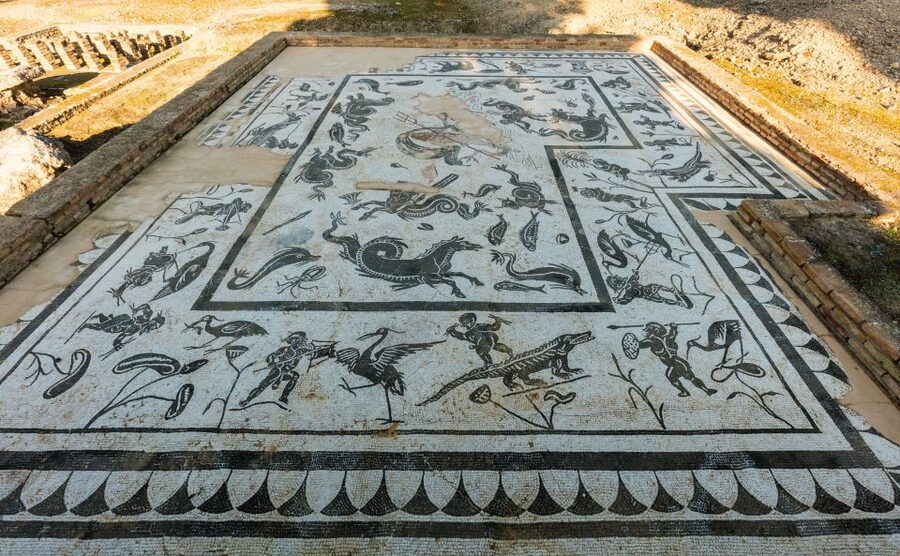
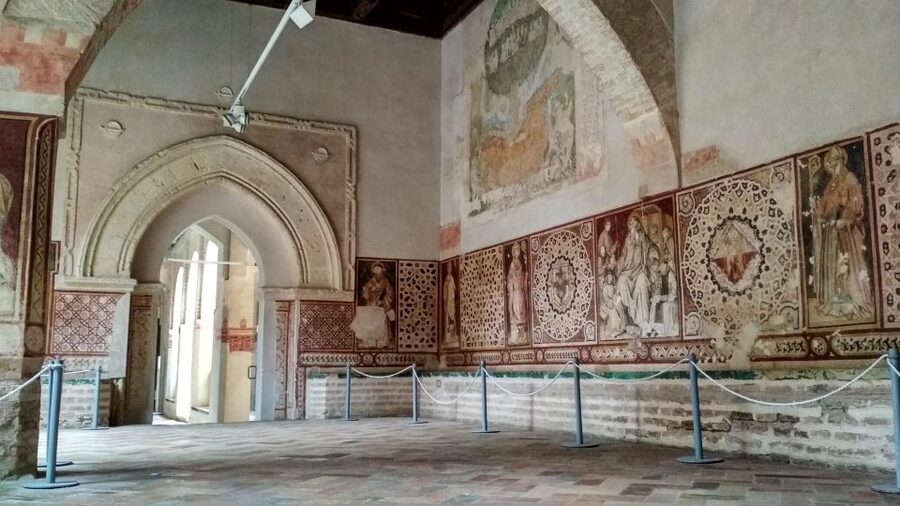
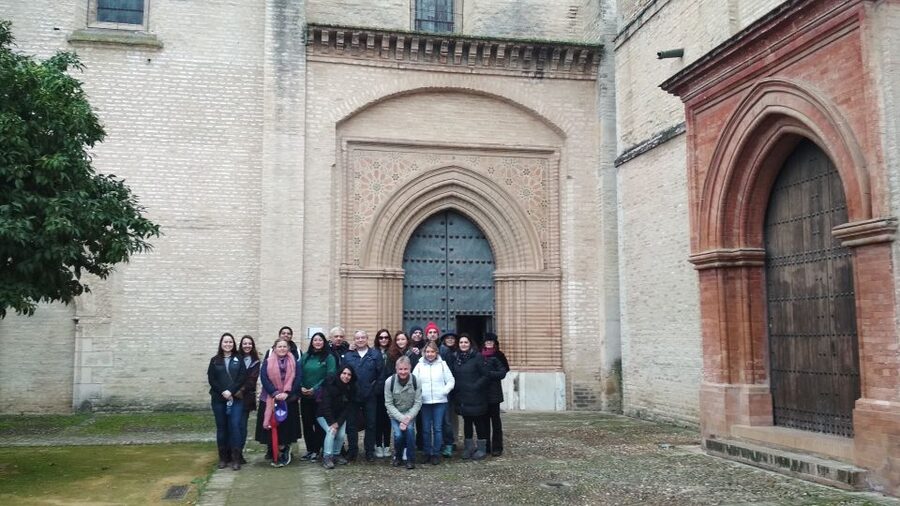
After Italica, the coach takes about 10 minutes to reach the Monastery of San Isidoro del Campo. The guided visit lasts around 40 minutes, and the contrast is part of what makes the pairing work. You move from Roman civic life to a medieval religious complex, with architectural features shaped by Mudejar, Gothic, and Baroque styles.
The monastery is more than a bonus stop. Its fortified appearance and mix of styles offer a different way to think about the region’s past, and the guide can put its details into context after the Roman ruins. Several people who favor the monastery over Italica do so for its architecture and atmosphere, so don’t assume it will feel like an afterthought.
Only part of the monastery is open to visitors, and some areas have been affected by funding limits. That means this is a selective visit, not a full exploration of every room. Still, the time is enough to see a distinct site and understand why it belongs on the same outing as Italica.
The pairing also helps break up the history. If you spend the whole morning among Roman remains, the monastery brings a new period and visual language into the trip. For anyone with a broad interest in Spanish history, that shift is good value for the extra time.
How the four-hour schedule feels
The stated duration is four hours. The core schedule includes roughly 20 minutes of travel to Italica, 105 minutes at the site, 10 minutes to the monastery, 40 minutes there, and 20 minutes back to Seville. The remaining time allows for transitions and the practical parts of moving a group between stops.
In real life, the trip may take longer. Traffic leaving Seville has delayed some departures, while other groups have found the outing ran beyond the advertised duration. The guide may extend the visit rather than cut time at the sites, but don’t schedule a tight appointment immediately afterward. Leave a buffer.
There is a small exhibition and toilets at Italica, but facilities are limited. One visitor found the toilets dirty, a reminder that this is an archaeological site rather than a polished museum. You will want to plan food and drink before or after the tour: neither is included, and hunger can make the final stretch feel longer.
The tour has been described as well paced, with guides keeping explanations lively and stops focused. Still, the schedule does not promise a long stretch of free time. If independent browsing matters to you, ask about the format when booking and be ready to choose between a guided overview and a self-paced visit.
Same city, a different kind of day:
- Seville: Royal Alcázar Entry Ticket
★ 4.6 · 28,378 reviews - Seville: Cathedral and La Giralda Entry Ticket
★ 4.5 · 24,592 reviews - Seville: Live Flamenco Dancing Show Ticket at the Theater
★ 4.7 · 16,396 reviews - Seville: Casa de la Memoria Flamenco Show
★ 4.8 · 12,964 reviews
Shared or private: choosing your format
A shared tour is the lower-cost way to see both sites, with transport from Seville and a local guide included. It suits solo visitors, couples, and small groups who are comfortable meeting others and following a shared schedule. At the destination, larger transport groups may split into smaller language groups.
Choose the private option if you value a more personal outing or want hotel pickup, subject to your accommodation’s location. Pickup arrangements are confirmed after booking. The private format may be a better fit if you have specific questions or want the guide’s attention, but the advertised price of $46 per person may not apply to every private arrangement, so check the price for your chosen option.
For either format, the tour is a practical choice if you want the context a guide provides. You could arrange a visit to Italica on your own, but transport, tickets, and the monastery stop would then require separate planning. The package puts the main pieces together in one half-day outing.
Is $46 good value?
At $46 per person, the advertised price includes transport from Seville, entry tickets, and a local guide at both sites. That is a solid bundle for a half-day trip, especially if you want the historical explanation rather than just access to the ruins. The monastery also broadens the experience without requiring you to organize another excursion.
The guide is central to the value. The best accounts of the trip describe engaging explanations, historical context, humor, and a guide who makes room for questions. Names that have come up include Miguel, Carlos, Alberto, Jesús, José Luis, and others, but you cannot book a particular guide based on the information provided.
The value is less compelling if your priority is unrestricted time at Italica. The guided schedule keeps the outing efficient, but it can leave limited room to linger. You are paying for the combination of transport, access, interpretation, and a second site, not for a full day of open-ended exploration.
Who should book this outing?
I would recommend it to anyone staying in Seville who wants to see an important Roman site without spending a day sorting out logistics. It also suits history-minded visitors who like having an expert connect the mosaics, amphitheater, and monastery to their wider context.
The mix works for families with older children and teenagers, too. The amphitheater is easy to picture, the gladiator passages give the Roman story a human scale, and the Game of Thrones connection can help younger fans engage with the setting. The tour is not just for screen fans, though; the architecture and archaeology carry the visit.
If you walk at a slower pace or use a walking aid, tell the guide or provider in advance. One guide was praised for paying attention to a participant who used a walking aid, but the available details do not give specific accessibility information about the sites. Ask before booking if you need to know about surfaces, steps, or seating.
Book this tour if you want an efficient, guided introduction to Italica and a worthwhile medieval stop in the same morning. Skip it if you want hours to explore the ruins alone, need a guaranteed language with fewer than four participants, or have a tight schedule afterward. For most visitors, the combination of Roman remains, mosaics, amphitheater, monastery, and transport makes a strong half-day from Seville.
FAQ
How long is the tour?
The stated duration is four hours. It can run longer, so leave extra time before making plans afterward.
What is included in the price?
Entry tickets, transport from Seville, and a local guide are included.
Are food and drinks included?
No. Food and drinks are not included.
Which languages are offered?
The tour is offered in English, French, Italian, and Spanish.
Is my chosen tour language guaranteed?
A minimum of four participants speaking the same language is required to guarantee it. If that number is not met, you may be offered another language, a different date, or a full refund.
Where does the tour meet in Seville?
The meeting point depends on the option you book. Shared tours offer three meeting points in Seville.
Is hotel pickup available?
Pickup is available for the private tour, depending on your accommodation’s location. If it is outside the pickup area, you will be given the nearest accessible pickup point.
How much time is spent at Italica?
The guided visit at Italica lasts about 105 minutes.
How much time is spent at the monastery?
The guided visit at San Isidoro del Campo lasts about 40 minutes.
Can I cancel for a refund?
You can cancel up to 24 hours in advance for a full refund.
Newest tours in Seville
- From Cadiz: Private Seville Day Trip, Cathedral & Alcazar★ 5.0 · 3 reviews
- Cordoba: Guided Tour of Medina Azahara at Night★ 4.5 · 92 reviews
- From Malaga: Ronda y Setenil de la Bodegas Day Trip by coach★ 4.8 · 8 reviews
- Flamenco Dance Lesson: 60-Minute Class in Seville★ 4.9 · 81 reviews
- Founder Winery: TOUR GASTRO EXPERIENCE★ 4.9 · 8 reviews
- Vejer and Conil: Tour from Jerez, El Puerto, Cádiz, Chiclana★ 4.8 · 18 reviews
- Extra Virgin Olive oil tasting★ 4.9 · 79 reviews
- Seville: Flamenco Show and Tapas in Triana Private Tour★ 5.0 · 3 reviews
Italica Tours, compared.
Historical Italica: Half-Day Guided Tour from Seville
Read our review →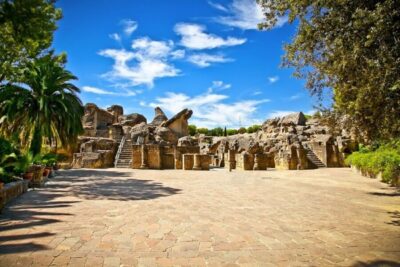
Visit to Italica Roman Ruins Tour tickets included
Read our review →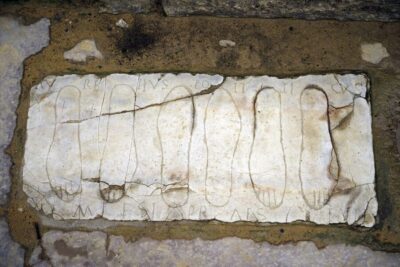
Browse the lists this tour appears in