
Review · CORDOBA TOURS
Cordoba: 2.5-Hour Guided Jewish Quarter and Alcazar Tour
Cordoba’s layers of Muslim, Jewish and Christian history come into focus on this walk, from a narrow Arabic-era lane to a medieval synagogue and the gardens of the Alcazar. It’s a useful way to connect famous sights with the quieter corners between them.
I like two things in particular: a single-language guide, so the explanations don’t switch between English and Spanish, and the chance to see small sites such as the Mudejar chapel and synagogue alongside the city’s headline monuments. One important caveat: restoration work limits the Alcazar visit to the gardens and Arab Baths, and weather can close the gardens.
Key points to know
- Calleja de la Hoguera offers an early glimpse of Cordoba’s Arabic-era street plan.
- The Jewish Quarter includes a former hospital, a Mudejar chapel, craft stalls and a 14th-century synagogue.
- Alcazar access is restricted to the areas currently open, the gardens and Arab Baths.
- The guide speaks one language during the tour, in English or Spanish.
- Allow for stairs and walking: this tour is not recommended for people with mobility impairments or back problems.
- The advertised duration is 2.5 hours, though the actual visit can be shorter or altered by closures.
From the Mezquita-Catedral to Calleja de la Hoguera
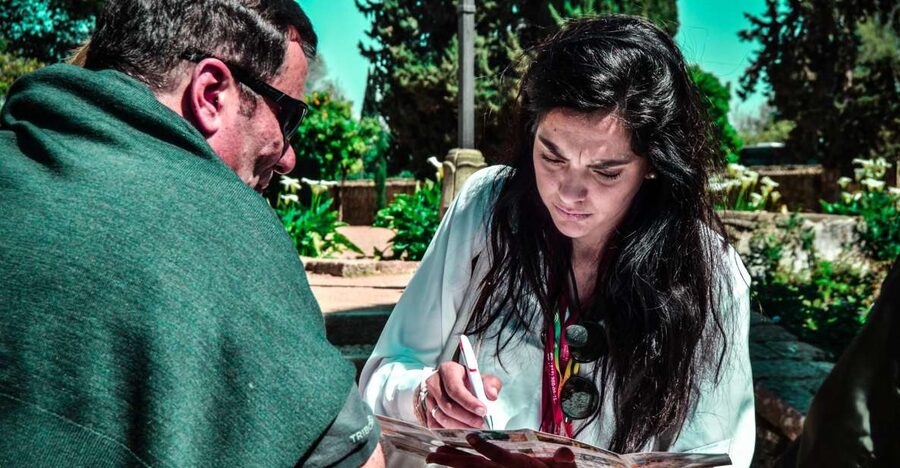
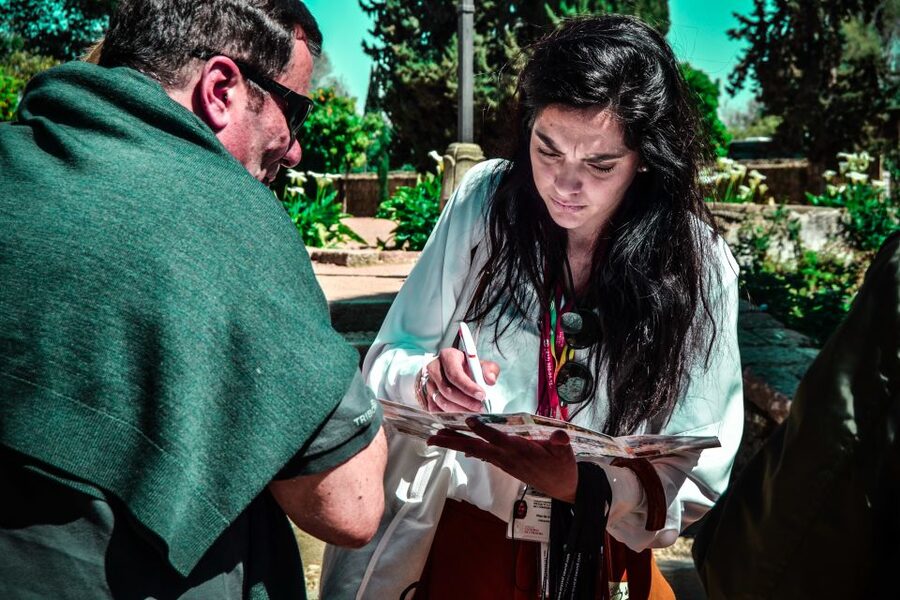
Meet at Puerta del Perdón, beside the Mezquita-Catedral, and look for the orange umbrella. The tour begins in the historic center, where a guide can help you read the city’s streets as more than a pretty jumble of stone and whitewashed walls.
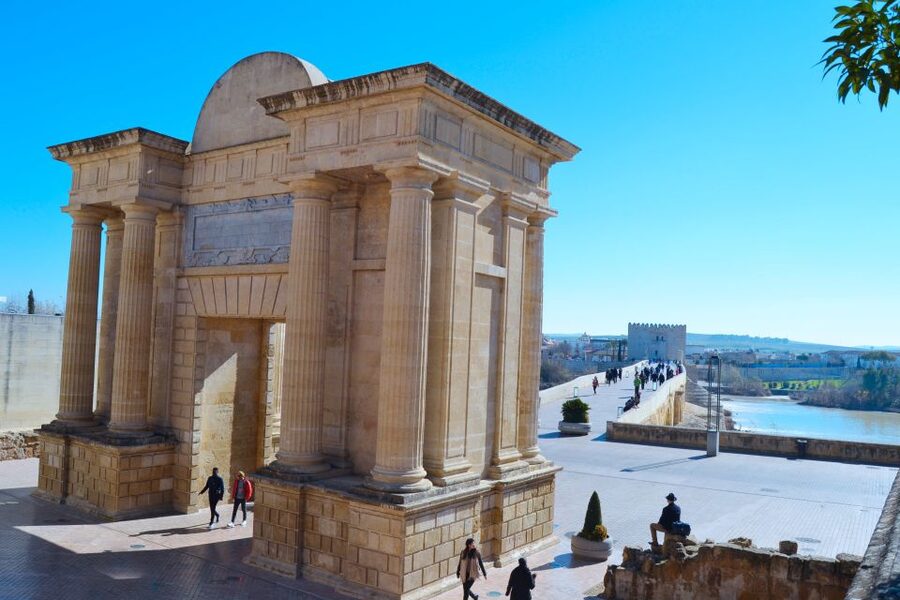
One early stop is Calleja de la Hoguera, a narrow lane dating from the Arabic era. You’ll also see a historic mosque. Cordoba is believed to have had more than a thousand mosques in the 10th century, a striking reminder of the city’s scale and influence at the time. The tour does not promise entry to the mosque, so think of this as a chance to see the site and hear its context, not a visit inside.
That distinction matters on a walking tour. You get the most from the stops when the guide explains what you’re looking at, and how the buildings fit into the city’s changing past. A lane that might otherwise be just a photogenic shortcut becomes a clue to an older Cordoba.
More guided tours in Cordoba:
- Córdoba: Skip-the-Ticket-Line Mosque-Cathedral Guided Tour
★ 4.6 · 9,634 reviews - Cordoba Mosque-Cathedral: Skip-the-Line Guided Tour
★ 4.7 · 6,610 reviews - Cordoba: Mosque-Cathedral E-Ticket with Audio Guide
★ 4.1 · 2,124 reviews
Reading the Jewish Quarter street by street
From Calleja de la Hoguera, the route continues into the Jewish Quarter, whose origins are given as the 14th century. The streets are compact, and the value here is in moving slowly enough to notice the details rather than simply ticking off landmarks.
At Plaza Cardenal Salazar, look for the statue of Algafequi, a 12th-century doctor associated with early eye surgery in Europe. The square also has an 18th-century hospital building, now used as a university. The mix of memorial, former medical institution and present-day university gives the stop several layers to discuss, even if you only spend a short time there.
The guide’s storytelling is central to the experience. Patricia, one of the guides associated with this tour, has been praised for connecting historical facts with anecdotes and keeping explanations engaging for both adults and younger visitors. That kind of approach is especially helpful in the Jewish Quarter, where the buildings can be easy to pass without context.
The Mudejar chapel and its layered past
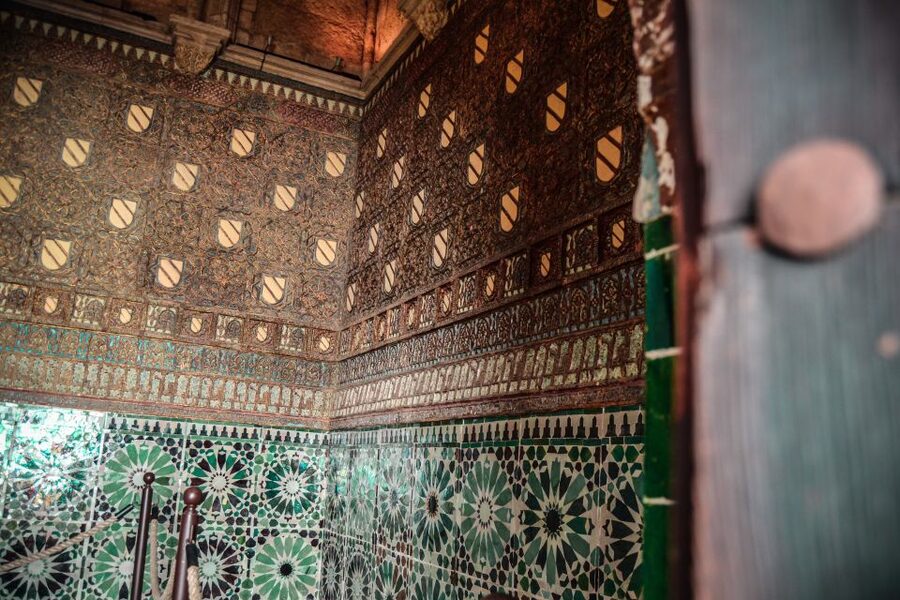
Next comes the Capilla Mudejar de San Bartolomé, a Christian chapel with Arabesque-style decoration, built by a Jewish convert. The contrast is the point: the building brings together forms and histories that don’t fit neatly into separate boxes labelled Muslim, Jewish or Christian.
Your guide explains the chapel’s less obvious history and details. That makes this stop more than a quick look at ornament. The tour’s appeal lies in these moments when a small building opens a window onto the people and traditions that shaped Cordoba.
The chapel is a particular reason to choose a guided walk over a simple route on your phone. You can appreciate the decoration on your own, but a guide gives you a way to understand why it looks the way it does and what its story says about the city.
Craft stalls before the medieval synagogue
The route then reaches the souk, a craft market selling local products associated with Cordoba. It offers a change of pace from the historic monuments and a chance to see local craftwork in a working market setting.
You may have time to browse, but this is a guided tour rather than a shopping visit, so don’t count on a long independent stop. If you see something you want to buy, keep an eye on the group and the schedule.
The next major stop is the medieval synagogue, built in the 14th century. It is one of the few Jewish monuments to survive Cordoba’s turbulent history, which makes it an especially significant part of the walk. The building’s survival gives the Jewish Quarter a tangible link to its past, rather than leaving that history only in names and street plans.
This is one of the tour’s strongest stops for anyone interested in the city’s Jewish heritage. The synagogue is a place to pause and take in both its architecture and its rarity. The guide’s context helps you understand why this relatively small monument carries so much weight.
Same city, a different kind of day:
- Córdoba: Jewish Quarter, Mosque, and Alcázar Tour
★ 4.7 · 4,279 reviews - Cordoba: Equestrian Show General Entry
★ 4.5 · 2,333 reviews - Cordoba Mosque & Jewish Quarter Tour with Tickets
★ 4.6 · 1,996 reviews - Cordoba: Alcazar Guided Tour and Skip-the-Line Ticket
★ 4.2 · 1,792 reviews
What the Alcazar visit includes now
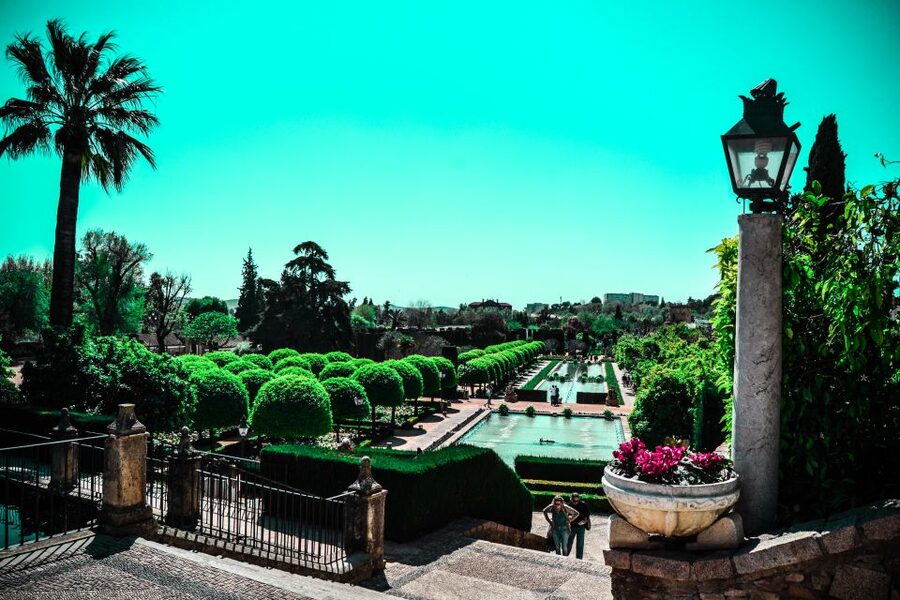
The walk ends at the Alcazar of the Christian Monarchs, a former palace complex with an important role in Cordoba’s history. The tour includes entrance fees and skip-the-line access, but restoration work currently changes what you can see.
At present, access is limited to the Alcazar Gardens and the Arab Baths of the Caliphal Alcazar, both within the same monumental complex. The main buildings are not open for the usual guided visit, and the tour does not include the towers. Check the current access conditions before booking if seeing the palace interiors is a priority.
There is another practical wrinkle: the gardens can close to the public because of weather. When that happens, the expected Alcazar portion may be unavailable, and the guide may extend the walk through the Jewish Quarter instead. Raphael, a guide on the tour, has been praised for adapting the visit when the gardens were closed, but a changed route is still a different experience from the one you may have planned.
So go in with flexible expectations. The Alcazar remains a meaningful end point, but this is not currently a full palace tour. If the gardens are open, they provide a calmer finish after the tight lanes of the old quarter. If they are closed, the route may spend more time in the Juderia.
Is $34 a fair price?
At $34 per person, the tour is good value if you want a guide to connect several sites in a short stretch of central Cordoba. The price includes the guided tour and entrance fees, and skip-the-line access can save time at included entry points. You’re also getting more than a walk past the city’s best-known sights: the synagogue, Mudejar chapel and souk add variety to the route.
The value depends partly on what you expect from the Alcazar. With the current restoration limits, you’re paying for a walking tour with access to the gardens and Arab Baths, not a full tour of the palace buildings. If the main interiors are the reason you’re booking, this may not be the right moment.
Duration is another point to weigh. The tour is advertised as 2.5 hours, but some visits have run shorter. Weather and restoration conditions can also change the route. I’d leave a little breathing room in your schedule rather than planning another timed activity immediately afterward.
Practical details before you go
The meeting point is Puerta del Perdón at the Mezquita-Catedral, Calle Cardenal Herrero, 1. Look for the orange umbrella. The guide leads the tour in English or Spanish, and the group stays with one language rather than switching back and forth.
Wear comfortable shoes. There are many stairs, so the tour is not recommended for people with mobility impairments or back problems. Baby strollers must be left at the entrance, and towers are not included.
Food and hotel pickup are not included. If you need flexibility, you can reserve now and pay later, and cancellation is free up to 24 hours before the tour. Those terms are useful, but the bigger planning question is the Alcazar’s current access. Confirm the latest conditions before you set your expectations.
Who should book this walk?
I’d choose this tour if you want a compact introduction to Cordoba’s Jewish Quarter and prefer a guide to explain the links between its monuments. It suits first-time visitors, history-minded walkers and anyone who wants to pair well-known sights with smaller places that are easy to overlook on a self-guided route.
It is less suitable if you need step-free access, have back problems, or are booking chiefly for a full visit inside the Alcazar palace. Restoration and weather can limit that part of the experience, and the actual tour may finish before the full 2.5 hours.
If the Jewish Quarter is your priority and you’re comfortable with a flexible Alcazar stop, the balance is appealing: a local guide, several distinct historic sites and skip-the-line access for $34. Book it with realistic expectations about the palace, comfortable shoes on your feet, and time left in your day in case the walk ends early.
FAQ
How long is the tour?
The stated duration is 2.5 hours. The actual visit can be shorter, so avoid scheduling a tight appointment immediately afterward.
Where is the meeting point?
Meet at Puerta del Perdón, Mezquita-Catedral, Calle Cardenal Herrero, 1. Look for the orange umbrella.
What languages are available?
The live guide speaks English or Spanish. The guide stays with one language rather than switching between them.
What parts of the Alcazar can I visit?
Because of restoration work, the visit is currently limited to the Alcazar Gardens and the Arab Baths of the Caliphal Alcazar. The towers are not included, and weather may close the gardens.
Is the tour suitable for people with limited mobility?
No. The tour is not recommended for people with mobility impairments or back problems, and the route includes many stairs. Baby strollers must be left at the entrance.
What is included in the price?
The guided tour and entrance fees are included. Food and hotel pickup are not included.
Newest tours in Cordoba
- Heritage Córdoba: The most essential tour in Córdoba★ 5.0 · 8 reviews
- Guided tour of Medina Azahara only in french★ 5.0 · 11 reviews
- Full Córdoba tasting★ 4.6 · 24 reviews
- Cordoba: Guided Tour of Medina Azahara at Night★ 4.5 · 92 reviews
- Extra Virgin Olive oil tasting★ 4.9 · 79 reviews
- Cordoba: Early Bird Private Tour of the Mosque-Cathedral★ 5.0 · 14 reviews
- Córdoba: Tour of the three cultures to see the city in a day★ 4.9 · 17 reviews
- Tapas Tour in Córdoba★ 4.1 · 18 reviews
Cordoba Tours, compared.
Skip-the-Ticket-Line Mosque-Cathedral Guided Tour
Read our review →
Cordoba Mosque & Jewish Quarter Tour with Tickets
Read our review →
Skip-the-Line Great Mosque-Cathedral History Tour
Read our review →
Mosque-Cathedral of Córdoba Guided Tour with Tickets
Read our review →
Browse the lists this tour appears in