
Review · SEVILLE TOURS
Sevilla: Ramón Sánchez Pizjuán Stadium Entry Ticket
At Ramón Sánchez-Pizjuán Stadium, the route takes you from the club museum to the players’ locker room, then through the tunnel toward the pitch. This is a chance to see the match-day spaces from the inside, not just admire the stadium from the stands. The venue opened in 1958 and hosted the 1982 World Cup semifinal.
I like two things in particular: you can explore at your own pace, and the audio guide gives context to the club’s beginnings and its major trophies. The visit also moves beyond display cases, with access to the VIP box and press room.
One consideration: this is self-guided, not a live tour with a guide to answer questions. You’ll need a charged smartphone and headphones, and the experience is not suitable for wheelchair users.
- Walk the players’ route: Visit the locker room and follow the tunnel toward the pitch.
- Trace the club’s beginnings: The museum covers Sevilla FC’s story from its founding in 1890.
- See major silverware: Displays include La Liga, five Copa del Rey titles, and European and Spanish Super Cups.
- Try the match-day spaces: The route includes the VIP box and a press room set up for a player-style interview.
- Use the audio guide app: Choose from nine languages, including Spanish, English, French, and Arabic.
- Allow about 90 minutes: The visit is self-paced, with no live guide setting the speed.
From the museum to the pitch tunnel
This visit works best as a walk through Sevilla FC’s story, with the stadium itself as the final act. You begin at the stadium entrance turnstiles, show the ticket sent to you by email, and head into the museum. From there, the route brings the club’s past into focus before taking you through areas normally associated with players, officials, and match-day staff.
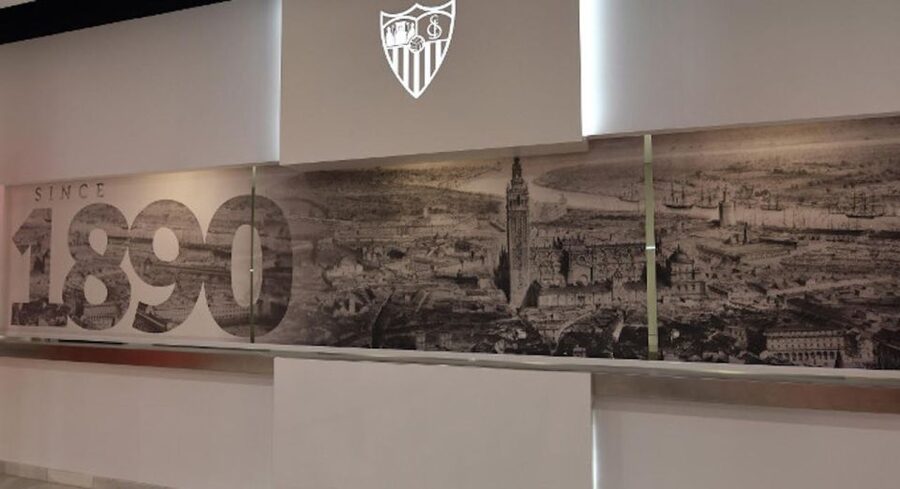
The museum starts with the club’s origins in 1890. It also covers what is described as the first documented football match in Spain, then introduces the players, coaches, and presidents who shaped the club. The audio guide adds explanations as you move through the displays, so you can pause where a story catches your attention rather than keeping pace with a group.
That freedom is a real strength. If you’re a committed Sevilla FC supporter, you can linger over the details and trophies. If football is more a cultural curiosity than a passion, you can listen for the broader story: how a club builds traditions, celebrates its wins, and gives a city a shared identity.
The visit is designed to take about 1.5 hours, but the self-guided format gives you room to move at your own speed. The stated duration is a useful planning guide, not a promise that you’ll spend exactly 90 minutes inside.
Sevilla FC’s story, told through shirts and trophies
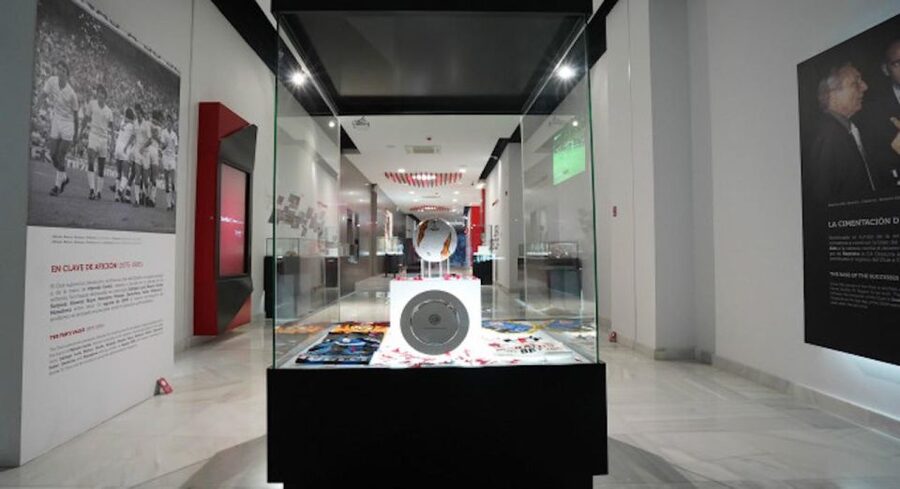
The museum’s most direct appeal is visual. You can look at player jerseys, photographs, and trophies while the audio guide fills in the context. Rather than reading a bare list of wins, you get a chance to connect the objects with the club’s people and milestones.
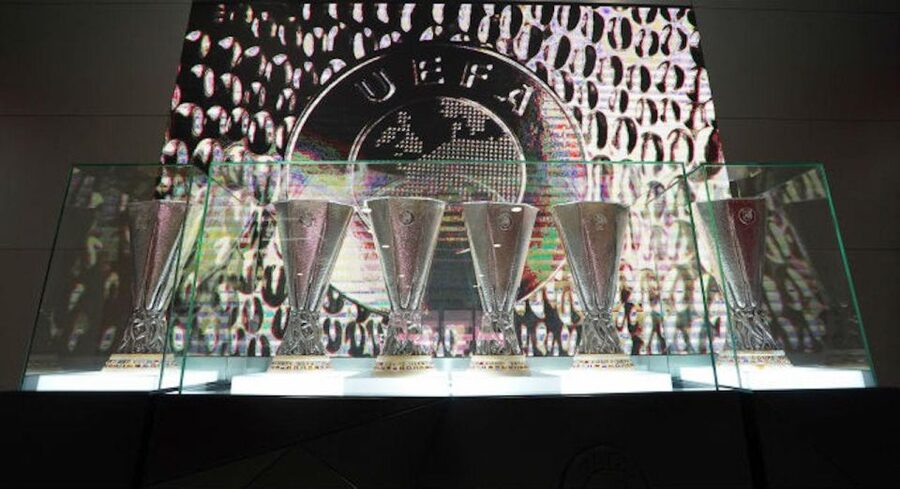
The silverware includes La Liga, five Copa del Rey titles, the Supercopa de España, and the Supercopa de Europa. These displays will mean most to fans who recognize the competitions and want to revisit the club’s achievements. But even if you don’t follow Spanish football closely, the trophies give the museum a clear thread: this is a club with a long record of competing at the highest level.
The museum’s focus is Sevilla FC rather than football in general. That makes it a more satisfying stop if you want to understand the home club than if you’re looking for a broad history of the sport. The audio guide helps bridge that gap, especially for visitors who don’t already know the names and dates.
I’d listen rather than rush past the exhibits. The shirts and photographs are the physical evidence; the stories about players, coaches, and presidents help explain why they matter. You can take in the displays without needing to be an expert, but the more familiar you are with the club, the more likely you are to catch the significance of each achievement.
More tickets and passes in Seville:
- Seville: Royal Alcázar Entry Ticket
★ 4.6 · 28,378 reviews - Seville: Cathedral and La Giralda Entry Ticket
★ 4.5 · 24,592 reviews - Seville: Live Flamenco Dancing Show Ticket at the Theater
★ 4.7 · 16,396 reviews
A closer look at the stadium’s working spaces
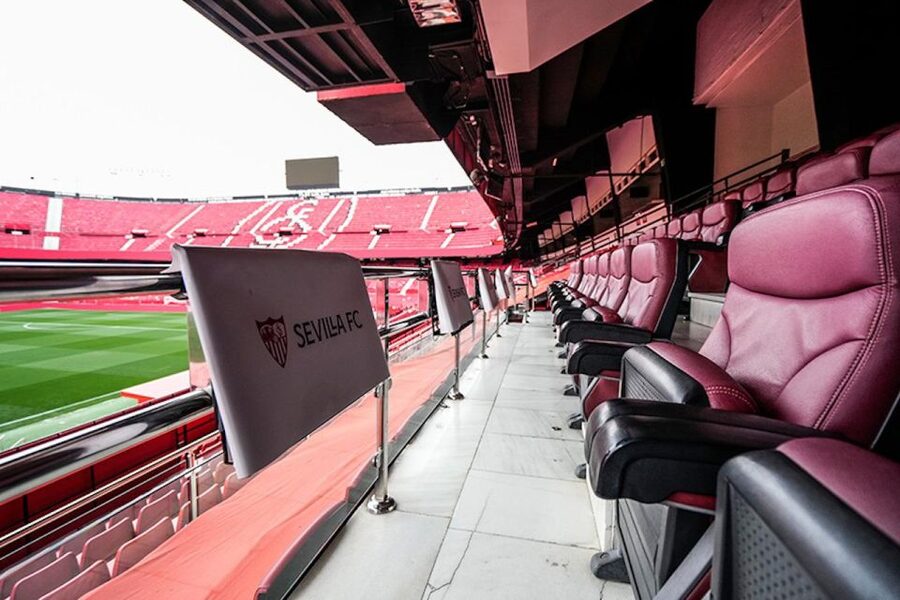
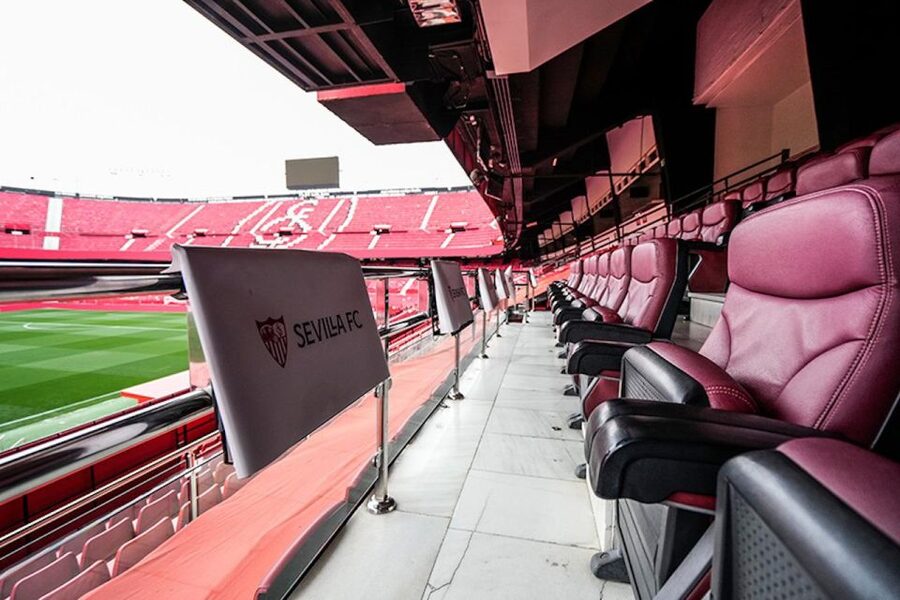
After the museum, the tour opens up parts of the stadium that give the visit its behind-the-scenes character. You can see the VIP box, enter the media room, and visit the players’ locker room. Each space offers a different angle on the same event: the match as seen by club officials, the press, and the team.
The VIP box is where you can picture the match from the club’s leadership point of view. The experience invites you to imagine being the president, a small bit of role-play that works because the setting is real. It is not a long explanation of club management, but it helps you see the stadium as more than a playing field.
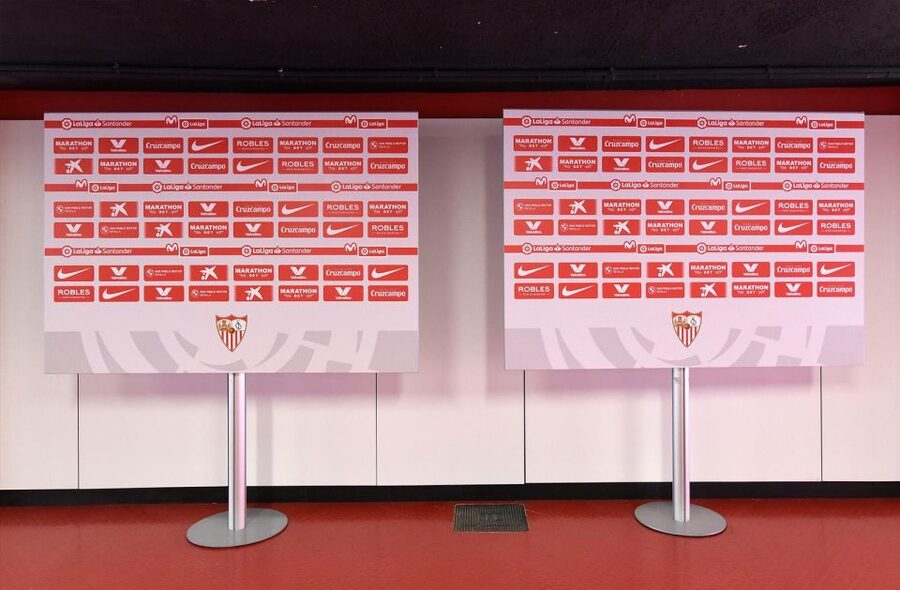
In the media room, you can take part in a press conference-style experience, answering questions as if you were a player. This is one of the tour’s lighter touches. It may appeal to children or anyone who enjoys the theatrical side of football, though you should think of it as a brief interactive moment rather than a full activity on its own.
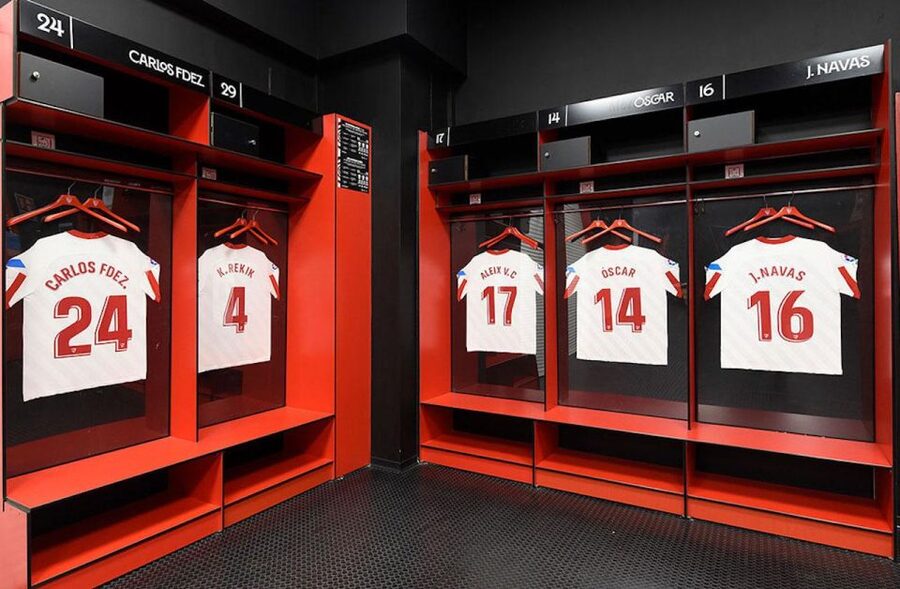
The locker room brings you closer to the team’s side of match day. You can see where players hang their jerseys, then walk toward the pitch through the tunnel they use to enter. It is the most evocative transition of the route: the museum’s history gives way to the physical setting where the next chapter of that history plays out.
The tunnel and the scale of the stadium
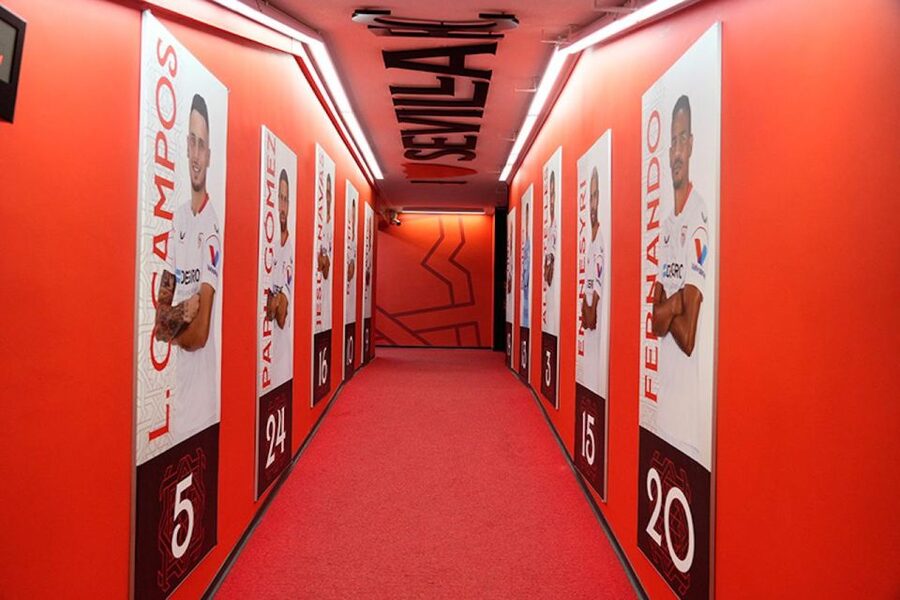
The walk from the locker room to the pitch is the natural climax. You follow the same route the players use, then emerge into the stadium, where the scale of the setting becomes easier to appreciate. The experience asks you to imagine the noise of supporters, the club anthem, and the anticipation just before a match begins.
That sensory element is part of the appeal, but keep expectations grounded. This is a stadium visit, not a live match, and the tour’s description evokes the crowd and anthem rather than promising an actual game-day atmosphere. You’ll be standing in the venue and picturing the roar, not hearing a full stadium of supporters around you.
The stadium’s age adds context to the visit. Built in 1958, Ramón Sánchez-Pizjuán has hosted major football moments, including the 1982 World Cup semifinal. That international history sits alongside Sevilla FC’s own story, giving the venue a place in both club and national football memory.
For many people, the pitch-side moment is the part they’ll remember most. For others, the museum or locker room may be the main draw. The route gives you a little of each, which is why it can work for a mixed group where one person knows every trophy and another simply wants to see what a major football stadium looks like from the inside.
What the audio guide adds, and what it cannot
The included audio guide is an app, not a live guide. It is available in Spanish, English, Arabic, Chinese, Japanese, German, Italian, Portuguese, and French. That range makes the tour practical for a wide mix of visitors, and the self-paced format means you can listen closely or move on when you’ve had enough.
Bring headphones and a charged smartphone. These are essential, not minor conveniences: without a working phone and a way to listen, you won’t have the audio commentary that explains the displays and stadium areas. Check your battery before you arrive, especially if you’re relying on your phone for maps and other plans later in the day.
The trade-off is that you won’t have a person leading the visit or answering follow-up questions. If you enjoy exploring independently, that is part of the value. If you prefer a guide who can adapt stories to your interests, this format may feel less personal.
The self-guided setup also means you control the pace. You can take extra time with the history, pause for photos, or move quickly through areas that interest you less. That flexibility is especially useful if your group has different levels of football knowledge.
Same city, a different kind of day:
- Seville: Casa de la Memoria Flamenco Show
★ 4.8 · 12,964 reviews - Seville: 1-Hour Guadalquivir River Sightseeing Eco Cruise
★ 4.2 · 10,281 reviews - Córdoba: Skip-the-Ticket-Line Mosque-Cathedral Guided Tour
★ 4.6 · 9,634 reviews - Seville: Cathedral, Giralda, and Royal Alcázar Guided Tour
★ 4.7 · 9,165 reviews
Is $16 a fair price for 90 minutes?
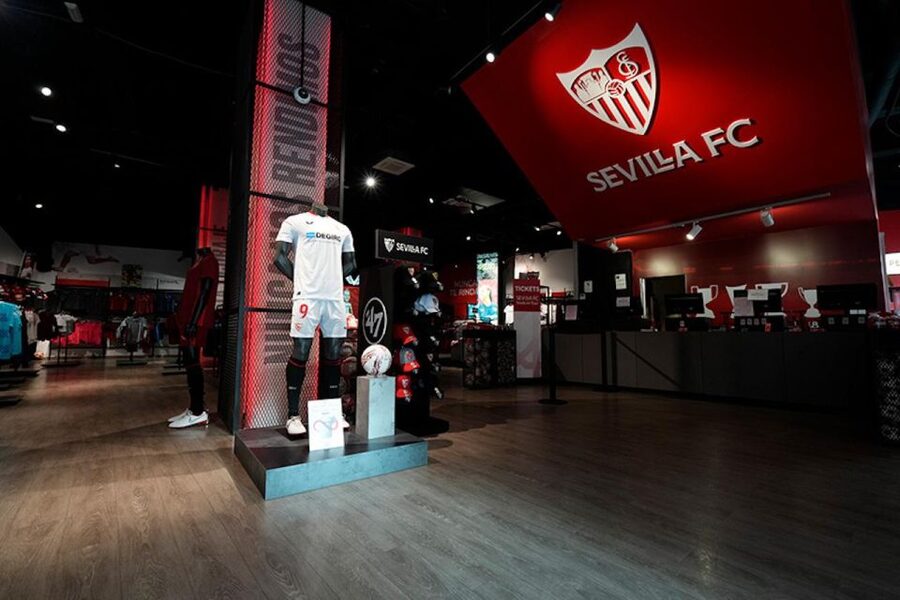
At $16 per person, the ticket gives you entry to the stadium and its museum, plus the audio guide app. It is a reasonable option if you value access to the locker room, VIP area, media room, and pitch tunnel as well as the exhibits. You are paying for more than a museum visit, though the exact value depends on how much you care about football and stadium architecture.
The tour is also described as allowing you to skip the ticket line. That can make the entry process simpler, though it does not change the self-guided nature of the visit. Starting times vary, so check availability for the date you want rather than assuming a particular departure time.
One visitor noted that a photo shoot was available for an additional €10. Treat that as an optional extra, not part of the $16 ticket, and check on site if you’re interested. The main admission does not include a tour guide.
The ticket is non-refundable, so make your plans with care. The activity ends back at the stadium meeting point, which keeps the outing straightforward to fit around other plans in Seville.
Who will get the most from this visit?
I’d recommend the tour first to Sevilla FC supporters, football fans, and anyone curious about how a major club presents its past. The museum, trophies, and player spaces give fans plenty to connect with, while the tunnel and pitch provide a tangible sense of the stadium’s scale.
It can also suit people who are not devoted football followers. The visit is self-paced, and the audio guide gives you a clear way into the club’s story. If you’re interested in local identity, sports history, or the design and operation of a large venue, there is more here than a collection of jerseys.
For a family or group with mixed interests, the interactive press-room moment and the walk to the pitch may help keep the visit lively. Still, the core subject is Sevilla FC. If you have little interest in football and a tight schedule, you may find the 90-minute visit less compelling than another Seville attraction.
Access is a practical point to consider before booking: the activity is not suitable for wheelchair users. The ticket is non-refundable, so be sure the format, timing, and access requirements fit your plans.
Should you book the Ramón Sánchez-Pizjuán tour?
Book it if you want to connect Sevilla FC’s story with the place where it unfolds. The strongest parts are the self-guided museum, the locker-room-to-pitch route, and the chance to see the VIP and media spaces without having to commit to a live group tour.
Skip it if you want an expert-led conversation or a broad, general history of football. For $16, it offers a solid 1.5-hour outing for fans and curious visitors, but the audio app and club-focused displays are central to the experience. Bring your headphones, charge your phone, and give the museum enough time before heading for the tunnel.
FAQ
How long does the stadium visit take?
The stated duration is 1.5 hours. Because the visit is self-guided, you can explore at your own pace.
How much does the ticket cost?
The listed price is $16 per person.
Is a tour guide included?
No live tour guide is included. Admission comes with an audio guide app.
Which languages are available on the audio guide?
The app is available in Spanish, English, Arabic, Chinese, Japanese, German, Italian, Portuguese, and French.
What should I bring?
Bring headphones and a charged smartphone to use the audio guide app.
What areas can I visit?
The route includes the museum, VIP box, media room, players’ locker room, and the tunnel leading to the pitch.
Does the visit include the stadium’s history?
Yes. The museum covers Sevilla FC’s origins in 1890, its players, coaches, presidents, and major trophies.
Does the ticket let me skip the ticket line?
Yes. The activity is listed as allowing you to skip the ticket line.
Is the tour suitable for wheelchair users?
No. The activity is listed as not suitable for wheelchair users.
Can I cancel the ticket for a refund?
No. The activity has a non-refundable cancellation policy.
Newest tours in Seville
- Intimate Flamenco: Exclusive Experience in Sevilla★ 4.9 · 69 reviews
- Highlights of Seville Monuments private Guided Tour★ 4.9 · 4 reviews
- From Seville: Horseback Riding Experience in Aljarafe★ 4.3 · 51 reviews
- From Seville: Andalusian Horseback Ride★ 4.9 · 28 reviews
- Enchanted Seville: Private Walking Tour★ 4.6 · 3 reviews
- Heritage Córdoba: The most essential tour in Córdoba★ 5.0 · 8 reviews
- Guided tour of Cadiz in French with a local guide★ 5.0 · 43 reviews
- Guided visit on foot through Cádiz: stories from the hand of a local guide★ 4.9 · 62 reviews
Seville Tours, compared.



Live Flamenco Dancing Show Ticket at the Theater
Read our review →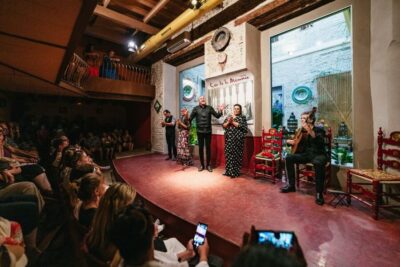

1-Hour Guadalquivir River Sightseeing Eco Cruise
Read our review →
Cathedral, Giralda, and Royal Alcázar Guided Tour
Read our review →
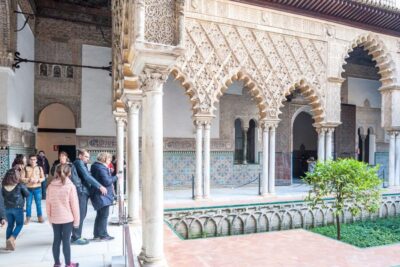
Cathedral, Giralda & Alcazar Entry With Guided Tour
Read our review →Browse the lists this tour appears in