
Review · SEVILLE PLAZA DE ESPANA TOURS
Private Tour Jewish Quarter, center and Plaza de España
Seville’s old Jewish quarter is more than a maze of pretty lanes. On this private walk, its courtyards and narrow streets open onto stories of Sephardic life, the expulsion of the Jews, and the legends that later made the neighborhood a stage for opera and literature. The route then carries you beyond the old center to the former tobacco factory and Plaza de España.
I like two things here: the route connects several sides of Seville, from medieval streets to the grand avenues and gardens shaped for the Ibero-American Exposition; and a private guide can tailor the conversation to your group. Víctor Fernández is the named guide and provider, and accounts of his tours describe an easy manner, lively storytelling, humor, and useful food tips.
The trade-off is pace. Two hours is a short time for this many subjects and stops, so expect an overview rather than a long visit at each place. The walk also ends at Plaza de España, not where it begins, so plan your next stop from there.
Key points
- Start in Plaza de Santa Cruz: Get an introduction to Seville’s Jewish past, its religious communities, and the neighborhood’s place in the city.
- Look for layers in the lanes: Hear about the old walls and gates, the necropolis, Susona’s legend, and the streets that inspired opera and fiction.
- Visit Santa Maria la Blanca: Enter the present-day church, on the site of an old synagogue, and see works by Murillo.
- Connect Carmen to a real workplace: The University of Seville occupies the former Royal Tobacco Factory associated with Mérimée’s inspiration for Carmen.
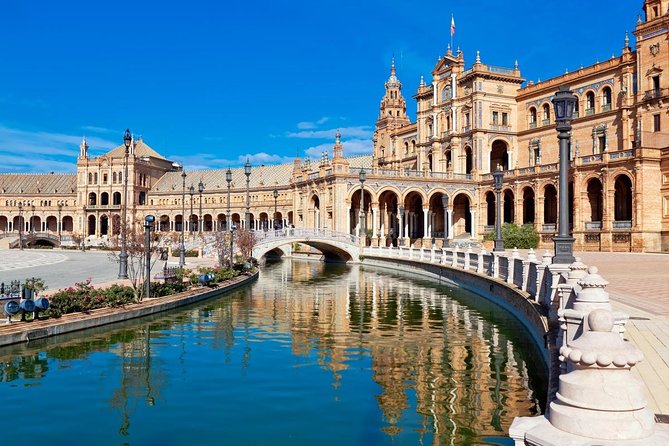
- Finish at Plaza de España: See the park and pavilions built for the Ibero-American Exposition, with a landmark setting for the final stop.
From Santa Cruz to Seville’s wider story
The route begins at Plaza de Santa Cruz, a useful place to start because the tour treats the neighborhood as more than a picturesque backdrop. Your guide sets out how Jewish, Muslim, and Christian communities shaped Seville, using a square associated with a mosque, synagogue, and church to explain how different faiths left their mark on the same city.
That context gives the walk a stronger footing. Instead of simply admiring a handsome lane or old church, you can place it within the changing fortunes of the people who lived here. The introduction also touches on Murillo, one of Spain’s best-known painters, and outlines the main stops ahead.
The first stretch covers the city’s walls and gates and the bounds of the area where Sephardic residents lived. You’ll also hear about the location of the old necropolis. These are useful details in a neighborhood where the old street pattern can make the past feel close, even when little is visible at street level.
There’s a stop by a statue of Don Juan, which brings the Spanish Golden Age into the story. The figure is closely tied to Seville’s literary imagination, and the stop helps explain how the city’s history and legends became material for writers and artists. It is a short pause, not a full discussion of Spanish theater, but it gives the route another thread beyond religious history.
Santa Maria la Blanca and Murillo
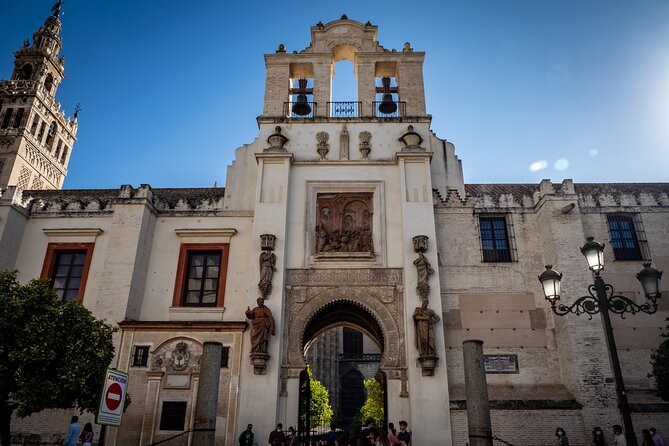
One of the tour’s clearest connections between past and present comes at Iglesia de Santa Maria la Blanca. The church occupies the site of an old synagogue, and the guide points out plaques linked to Caminos de Sefarad, a network that marks the history of Jewish quarters across Spain.
You’ll enter the current temple and see works by Murillo. The stop is listed as 10 minutes, so treat it as a focused visit rather than time to linger over every detail. Admission is listed as free, and the church visit gives the wider account of the neighborhood a specific place to anchor it.
The shift from synagogue to church is a reminder that Seville’s religious landscape changed sharply over time. The tour also addresses the violence against Jewish communities in the 14th and 15th centuries, including the pogrom and the eventual expulsion ordered by the Catholic Monarchs. This is difficult history, and it matters that the walk does not reduce the quarter to a romantic backdrop.
More Plaza de España tours in Seville:
- Seville: Professional Photoshoot at Plaza de España
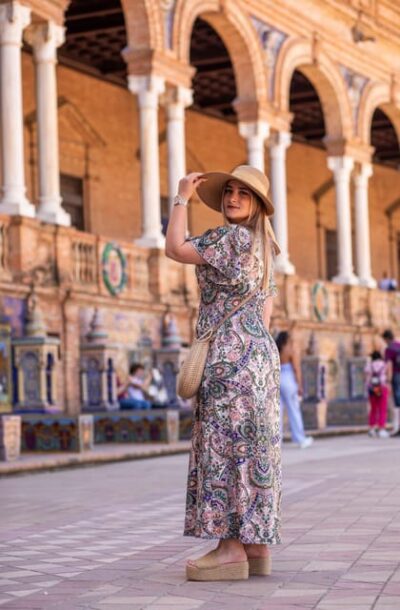
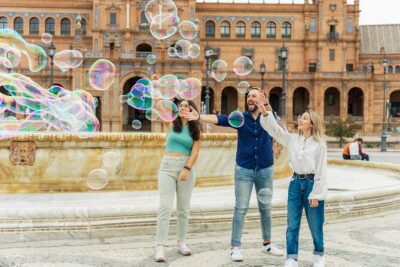
★ 4.9 · 211 reviews - Make Seville unforgettable: Private Photoshoot at Plaza de España
★ 5.0 · 45 reviews - Secretos del Parque María Luisa & Plaza de España Tour en Español
★ 5.0 · 36 reviews
Alleys, aqueducts, and the story of Susona
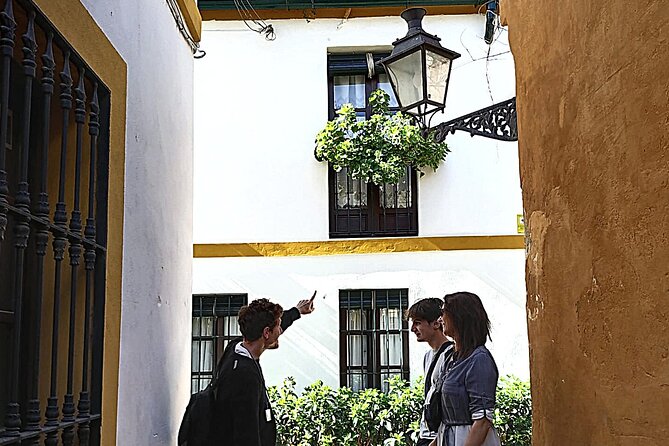
After Santa Maria la Blanca, the route winds through the lanes and courtyards of the old quarter. These passages are part of the pleasure of the walk: the close-set streets and intimate courtyards offer a very different feel from Seville’s broad avenues and monumental squares.
The guide points out the city’s narrowest street and Rosina’s balcony, linking the neighborhood to The Barber of Seville. You’ll also hear about Seville’s old aqueduct. These details make the walk playful as well as historical, though the literary references may mean more to you if you already know a little opera or theater.
The story of Susona adds a more personal legend to the account of Jewish Seville. Her tale is set against the upheavals of the 14th and 15th centuries, when Jewish communities faced persecution and then expulsion. A legend can’t replace the broader history, but here it offers a memorable way into the emotional texture of the period.
The route then moves through streets that helped give Seville its reputation as a City of Opera. European writers and artists used the neighborhood as a setting for novels and plays, so the guide traces the gap between the real medieval quarter and the romantic Seville imagined on stage. That contrast is part of the fun: the lanes are lovely, but their past was not all balconies and serenades.
Views of the Cathedral and Giralda
At one point, the walk opens to a broad view of Seville’s major landmarks: the Cathedral, Giralda, Real Alcázar, and Archivo de Indias. Together, these buildings are recognized as a UNESCO World Heritage Site, and seeing them gathered in one outlook helps you understand how compact the historic center is.
This is a good place to pause and take in the city’s scale before leaving the old quarter. The tour does not include a visit inside the Cathedral or Alcázar as part of the stated route, so consider this a viewpoint, not a substitute for a separate monument visit. If those interiors are high on your list, allow time for them on another day.
The tobacco factory behind Carmen
The tour then shifts from narrow lanes to the city’s later growth. It covers the importance of the Torre del Oro and the way Seville’s layout changed around the Ibero-American Exposition a century ago, including the development of important avenues such as Constitución and the presence of buildings such as the Hotel Alfonso XIII.
A 15-minute stop at the University of Seville brings the story to the old Royal Tobacco Factory, now the university’s headquarters. The factory is linked to Prosper Mérimée’s creation of Carmen, and the guide connects the opera’s literary world with the trade and manufacturing that shaped Spain under the Bourbons.
This stop broadens the tour’s scope. Seville’s story is not only medieval and religious; it also includes commerce, industry, and the cultural exchange between Spain and France. If you know Carmen, the setting gives the familiar story a more concrete place. If you don’t, the factory still offers a useful look at how work and politics helped shape the city.
More private tours in Seville:
- Seville: Private City Tour by Eco Tuk Tuk
★ 4.8 · 963 reviews - Tour Welcome Seville with Local Guide in Eco Tuk Tuk Private
★ 5.0 · 786 reviews - Private Seville Tapas & History Tour
★ 5.0 · 380 reviews - Seville Private Walking Tour with Alcazar & Cathedral Tickets
★ 5.0 · 332 reviews
Maria Luisa Park and Plaza de España
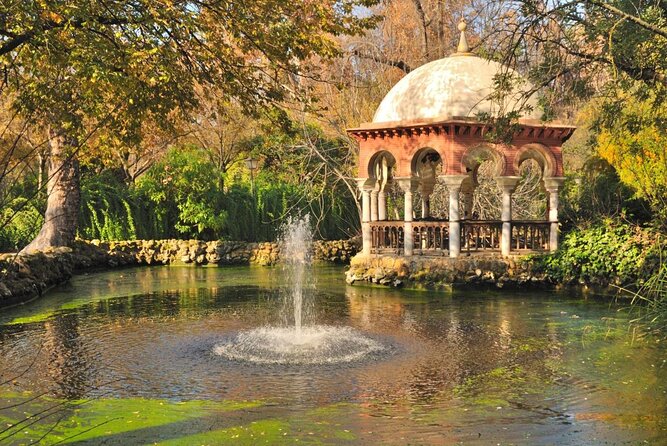
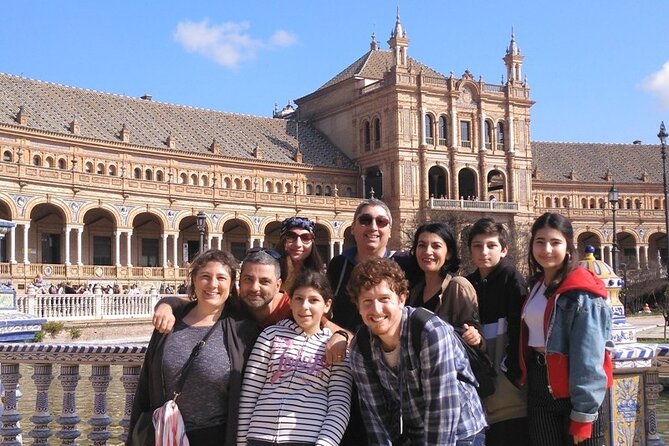
The final stretch enters Maria Luisa Park, where the route ends at Plaza de España. The park’s design is credited to the French garden architect Forestier, and the exposition brought the area’s pavilions and formal spaces into public view. The Plaza de España, the most famous of these, gives the tour a striking finish.
The listed stop here is 15 minutes. That is enough to take in the scale and the setting, but not enough for a leisurely circuit of the plaza and park. If you want time for photographs, a slow stroll, or a closer look at the pavilions, stay after the tour rather than expecting the guide to cover it all within the two-hour schedule.
Ending here is practical if you plan to continue exploring Maria Luisa Park. It also means you’ll need to arrange your return or next stop yourself, since the tour begins in Plaza de Santa Cruz and finishes in a different part of town.
What a private guide adds
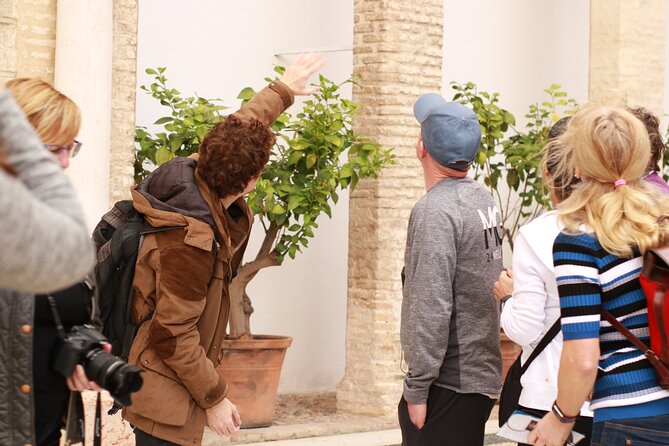
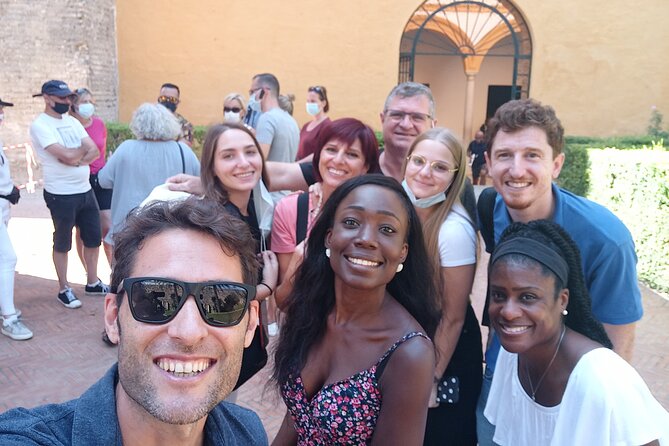
The main advantage of booking privately is having one guide for your own group, rather than joining a larger party. The price is $189.87 for up to 12 people. For a couple, that is a premium over a group walk; for a family or small group, the per-person cost drops quickly, and you can ask questions without needing to compete for the guide’s attention.
Víctor Fernández is the named provider. Accounts of his work describe him as a warm storyteller who explains Seville’s history with humor and adapts the discussion to people’s interests. They also point to practical recommendations for tapas bars and food in Seville and elsewhere in Andalucía. Those details can be valuable if you want more than dates and monuments, though food recommendations are not a stated part of the tour itinerary.
Do not assume that every tour includes coffee or comfort breaks just because they have been part of other outings with the company. The experience described here is two hours long, and the route has several stops to fit in. If you need a slower pace, ask before booking whether the schedule can be adjusted.
Is the two-hour route good value?
The price looks different depending on how many people share it. At the full group limit of 12, the cost works out to roughly $16 per person. For two people, it is close to $95 each. You are paying for a dedicated guide and a route that brings together Jewish history, opera, architecture, and the exposition-era city, rather than entry to major paid monuments.
The named admission stops, Santa Maria la Blanca, the University of Seville, and Maria Luisa Park, are listed as free. The tour does not include tickets to the Cathedral or Alcázar, and the route describes views of those landmarks rather than interior visits. If your priority is guided access to major monuments, this is not the right tour on its own.
For a first look at Seville, the range is the value. You get a map in your head: where the old Jewish quarter sits, how its stories connect to the larger center, and how the city grew toward the river and park. The limit is depth. You won’t have much time at each stop, so pair the walk with a slower visit to the buildings or museums that catch your interest.
Practical details before you book
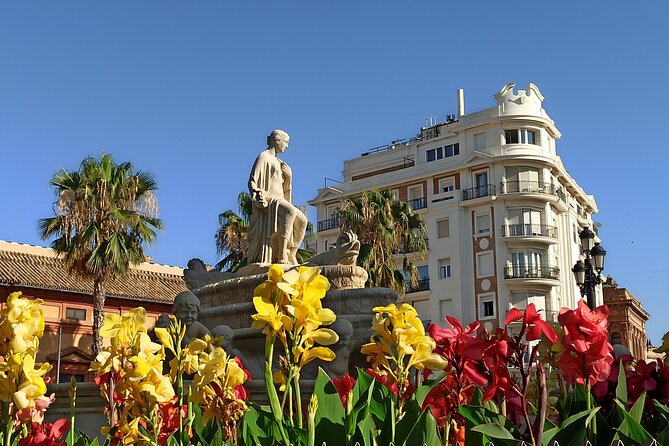
This is a private activity for your group, with a maximum of 12 people. It is offered in English and uses a mobile ticket. The tour lasts about two hours, starts at Plaza de Santa Cruz, and ends in the gardens of Maria Luisa Park at Plaza de España.
The listed operating hours run daily from 10 a.m. to noon. The experience is near public transportation, service animals are allowed, and most people can participate. The route includes narrow lanes and walking between sites, so consider your comfort with a two-hour city walk.
The experience is often booked well in advance, with the average booking made 122 days ahead. If your dates are fixed, planning early is sensible. Free cancellation is available up to 24 hours before the start time; changes or cancellations inside that window are not accepted for a refund.
Should you book this Seville walk?
Book it if you want a private, story-led introduction that links Santa Cruz’s Jewish past with Seville’s opera lore, industrial history, and Plaza de España. It is particularly appealing for a group of several people, since the fixed group price becomes better value as more people share it.
Skip it if you want a slow, in-depth visit to major monuments, or if you’d rather spend two hours inside the Cathedral or Alcázar. The route is broad and appealing, but brisk. For a first orientation and a guide who can connect the city’s many layers, it makes a strong start.
FAQ
How long is the tour?
It lasts about two hours.
What is the price?
The listed price is $189.87 per group, for up to 12 people.
Where does the tour start?
It starts at Plaza de Santa Cruz in Seville’s old town.
Where does the tour end?
It ends at Plaza de España, in the gardens of Maria Luisa Park.
What language is the tour offered in?
The tour is offered in English.
Is this a private tour?
Yes. Only your group takes part, with a maximum group size of 12.
Which guide is named for the experience?
Víctor Fernández is the named provider.
Does the tour enter Santa Maria la Blanca?
Yes. The route includes entry to the current temple, where you’ll see works by Murillo. Admission is listed as free.
When does the tour operate?
The listed hours are Monday through Sunday, from 10 a.m. to noon.
What is the cancellation policy?
You can cancel at least 24 hours before the start time for a full refund. Cancellations or changes made less than 24 hours before the start time are not accepted for a refund.
Newest tours in Seville
- Intimate Flamenco: Exclusive Experience in Sevilla★ 4.9 · 69 reviews
- Highlights of Seville Monuments private Guided Tour★ 4.9 · 4 reviews
- From Seville: Horseback Riding Experience in Aljarafe★ 4.3 · 51 reviews
- From Seville: Andalusian Horseback Ride★ 4.9 · 28 reviews
- Enchanted Seville: Private Walking Tour★ 4.6 · 3 reviews
- Heritage Córdoba: The most essential tour in Córdoba★ 5.0 · 8 reviews
- Guided tour of Cadiz in French with a local guide★ 5.0 · 43 reviews
- Guided visit on foot through Cádiz: stories from the hand of a local guide★ 4.9 · 62 reviews
Seville Plaza de Espana Tours, compared.
Make Seville unforgettable: Private Photoshoot at Plaza de España
Read our review →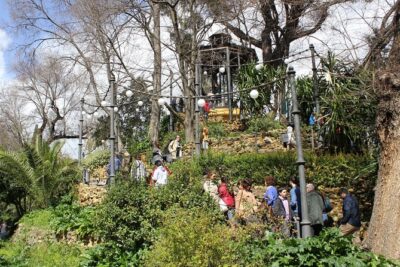
Secretos del Parque María Luisa & Plaza de España Tour en Español
Read our review →Browse the lists this tour appears in